Looking stylish does not mean wearing expensive brands or following every trend that appears on social media. Sometimes the biggest improvement comes from removing a few small mistakes that quietly make an outfit look less polished.
A shirt can be expensive but look messy if it does not fit properly. A great pair of trousers can lose its impact when paired with the wrong shoes. Even a simple outfit can look excellent when the proportions, colors, cleanliness, and details work together.
Good style is often less about buying more and more about wearing the right things in the right way.
Why Small Fashion Mistakes Matter
Clothing communicates before a conversation even begins. Fit, condition, color coordination, shoes, and accessories all contribute to the overall impression.
The older competitor guides correctly point out several basic problems such as wrinkled clothing, stains, excessive logos, poor fit, worn-out shoes, and too many accessories.
But simply knowing that something is a mistake is not enough. A useful style guide should explain why it looks wrong and what to do instead.
Wearing Clothes That Do Not Fit Properly
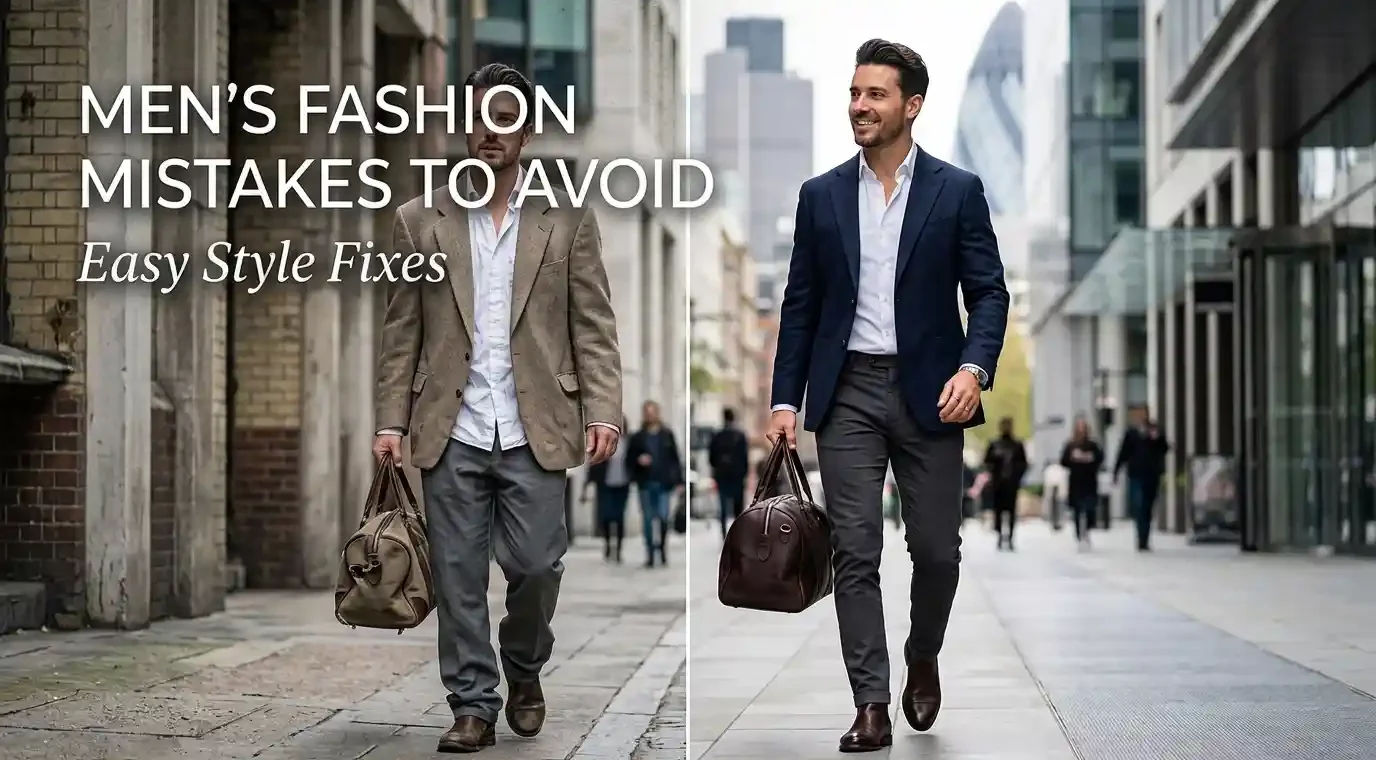
Fit is one of the most important parts of men’s style. Clothing that is too tight can look uncomfortable, while clothing that is much too loose can make the entire outfit appear untidy.
Lifehack covers both oversized and overly tight clothing, while StudioSuits also emphasizes the importance of correct measurements and tailoring for men’s clothing.
Shirts That Are Too Big
Excess fabric around the waist and sides can make an otherwise good shirt look sloppy.
Easy fix: Choose a size that follows the natural shape of the body without pulling across the chest or stomach.
Trousers That Are Too Long
Extra fabric bunching heavily around the shoes can make the lower half of an outfit look messy.
Easy fix: Get trousers adjusted so they create a clean, intentional break rather than excessive folds.
Clothes That Are Too Tight
Very tight clothing can restrict movement and make the outfit look forced.
Easy fix: Leave enough room to move comfortably while maintaining a clean silhouette.
Ignoring Wrinkles, Stains, and Clothing Condition
A stylish outfit cannot rescue clothing that looks neglected.
Wrinkled clothes and visible stains appear repeatedly among the competitors’ advice, and HowStuffWorks specifically highlights wrinkles and stains as common men’s fashion problems.
Wrinkled Shirts
A few minutes of steaming or ironing can completely change the appearance of a shirt.
Don’t wear a wrinkled shirt simply because everything else in the outfit looks good.
Stained Clothing
Small stains can become surprisingly noticeable, particularly on light-colored clothing.
Don’t keep wearing a visibly stained item and hope nobody notices; clean it properly or change the outfit.
Worn-Out Shoes
Shoes often receive more attention than expected because they complete the outfit.
Don’t pair an otherwise polished outfit with dirty, damaged, or visibly worn-out shoes.
Depending Too Much on Designer Logos
A large logo does not automatically make an outfit fashionable.
HowStuffWorks warns against excessive designer branding, while Lifehack similarly argues that clothing should be chosen for fit, appearance, and feel rather than simply the brand name.
Let the Outfit Speak
A subtle logo can be perfectly fine. The problem begins when branding becomes the main visual feature.
Easy fix: Prioritize fabric, fit, color, and overall design before thinking about the label.
Getting Colors Wrong
Color coordination does not require complicated fashion rules. A few dependable combinations can make everyday dressing much easier.
StudioSuits specifically discusses the importance of combining colors rather than creating a one-color business-casual outfit and warns about combinations such as black with brown accessories.
Wearing Too Many Strong Colors
Several bright colors competing for attention can make an outfit look chaotic.
Easy fix: Let one color become the focus and keep the remaining pieces more neutral.
Ignoring Shoe and Belt Coordination
Shoes and belts do not always need to be identical, but formal outfits generally look more cohesive when their tones coordinate.
Easy fix: Brown shoes usually work naturally with a brown-toned belt, while black shoes pair easily with a black belt.
Wearing the Wrong Shoes for the Occasion
Shoes can completely change the message of an outfit.
Sneakers may be perfect for casual clothing but inappropriate for certain professional settings. StudioSuits specifically identifies athletic sneakers as a common business-casual mistake and recommends more formal footwear options for those situations.
Casual Shoes With Formal Clothing
A formal outfit paired with extremely casual footwear can create an awkward contrast.
Easy fix: Match the formality of the shoes to the rest of the outfit.
Ignoring Shoe Condition
Even expensive footwear loses its impact when it is dirty or damaged.
Don’t wait for shoes to look completely worn out before cleaning, polishing, repairing, or replacing them.
Overdoing Accessories
Accessories should complete an outfit, not compete with it.
HowStuffWorks warns about excessive jewelry, while StudioSuits recommends keeping accessories restrained in business-casual settings.
A watch, simple belt, sunglasses, or one subtle accessory can often be enough.
If every accessory is trying to get attention, the outfit loses its sense of balance.
Dressing Without Considering the Occasion
One of the most useful style skills is knowing that the same outfit does not work everywhere.
Work, weddings, dates, casual outings, interviews, travel, and family events can all have different expectations.
Business Casual
Business casual sits between formal and relaxed dressing. StudioSuits highlights the importance of avoiding overly casual elements such as distressed denim and athletic sneakers in this setting.
Easy fix: Choose clean trousers or appropriate chinos, a suitable shirt, coordinated footwear, and restrained accessories.
Casual Outings
Casual does not mean careless.
Don’t treat old home clothes, damaged footwear, or heavily wrinkled pieces as your default outside outfit.
Quick Style Check Before Leaving Home
Before walking out the door, take thirty seconds and check the basics.
would otherwise stay unnoticed all day.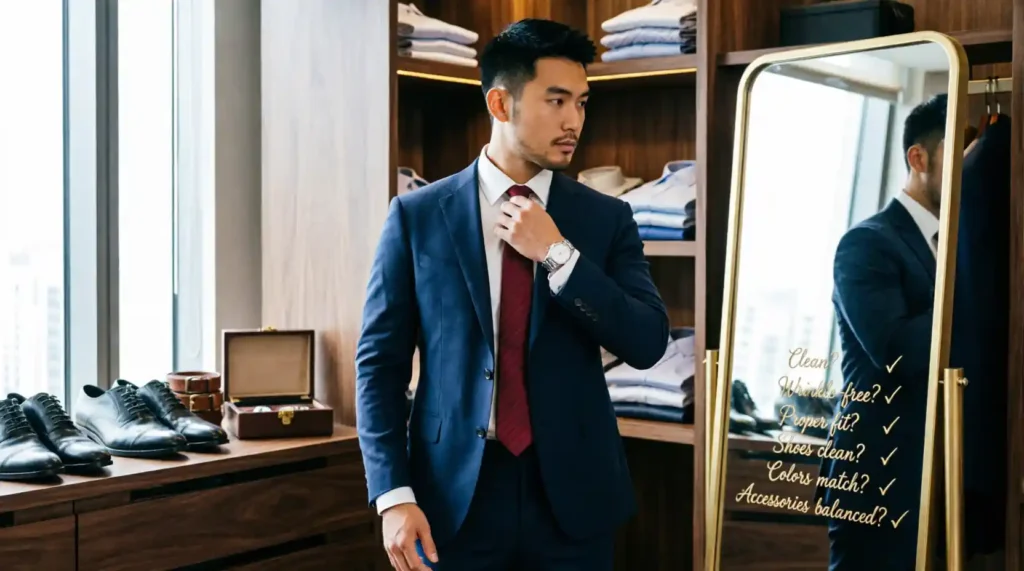
Choosing Trends Over Personal Style
Fashion trends can be fun, but wearing every trend at once can make an outfit feel temporary rather than personal.
Lifehack discusses following trends without considering whether they actually suit the person, while a more useful approach is to take inspiration from trends and adapt them to individual style. (lifehack.org)
Wear Trends in Small Doses
A trendy jacket, color, shoe, or accessory can refresh an outfit without changing the entire wardrobe.
Don’t replace your personal style every time a new fashion trend becomes popular.
Consider Your Lifestyle
Someone who works in an office needs different clothing from someone who spends most of the day outdoors or works in a creative environment.
The best outfit is one that looks good and makes sense for the life you’re actually living.
Wearing the Wrong Shirt With the Wrong Trousers
A shirt and trousers do not need to match perfectly, but they should look intentional together.
For example, a structured shirt can work well with chinos for a smart-casual appearance, while a relaxed shirt can be paired with casual trousers for an easier weekend outfit.
Balance Formal and Casual Pieces
Mixing different levels of formality can work when done deliberately.
Don’t combine a very formal piece with an extremely casual item unless the contrast is intentional.
Think About Proportion
A loose shirt with very loose trousers can make the entire silhouette look shapeless.
If one piece is oversized, consider keeping the other part of the outfit cleaner and more structured.
Ignoring Grooming
Clothing is only one part of personal presentation. Hair, facial hair, nails, and general cleanliness can influence how polished an outfit feels.
This is an area that basic fashion-mistake lists often mention less than clothing itself, yet it can make a noticeable difference in real life.
Keep Grooming Consistent
A simple haircut, tidy facial hair, clean nails, and fresh-looking skin can complement even a basic outfit.
Don’t spend time perfecting an outfit while completely ignoring basic grooming.
Wearing Too Many Patterns Together
Patterns can add personality, but several competing patterns can make an outfit look visually busy.
Start With One Statement Pattern
A checked shirt, striped shirt, patterned tie, or printed overshirt can become the main visual element.
Don’t make every piece of the outfit patterned; give the eye somewhere to rest.
Use Neutral Pieces for Balance
Plain trousers, simple shoes, or a neutral jacket can calm down a stronger print.
A statement piece works better when the rest of the outfit supports it instead of competing with it.
Ignoring Seasonal Dressing
Clothing should make sense for the weather as well as the occasion.
Heavy layers in hot weather can look uncomfortable, while extremely thin clothing in cold conditions can make an otherwise stylish outfit impractical.
Dress for the Temperature
Choose breathable fabrics and lighter layers during warm weather and add appropriate layers when temperatures fall.
Don’t sacrifice comfort simply to copy an outfit designed for a completely different climate.
Buying Clothes Without a Wardrobe Plan
Another common problem is buying individual pieces simply because they look good in a store.
A wardrobe becomes much more useful when new purchases work with items already owned.
Think in Outfits
Before buying something, consider at least two or three outfits that can be created with it.
Don’t buy a piece just because it looks great on its own; make sure it can actually work with the rest of your wardrobe.
Invest in Versatile Basics
Neutral shirts, well-fitting trousers, clean sneakers, versatile jackets, and quality everyday pieces can create many combinations.
A smaller wardrobe of useful pieces can be more valuable than a closet full of clothes that rarely get worn.
Men’s Fashion Mistakes to Avoid at a Glance
| Mistake | Why It Hurts the Outfit | Easy Fix |
|---|---|---|
| Wrong fit | Makes clothing look uncomfortable or sloppy | Prioritize correct measurements |
| Wrinkled clothes | Creates a neglected appearance | Iron or steam before wearing |
| Dirty shoes | Reduces an otherwise polished look | Clean and maintain footwear |
| Too many logos | Makes branding dominate the outfit | Choose subtle details |
| Poor color coordination | Creates visual imbalance | Keep combinations simple |
| Wrong shoes | Conflicts with the occasion | Match footwear to dress level |
| Too many accessories | Makes the outfit look busy | Keep accessories balanced |
| Too many patterns | Competes for attention | Use one main pattern |
| Ignoring grooming | Reduces overall polish | Maintain basic grooming |
| Blindly following trends | Can feel unnatural | Adapt trends to personal style |
A Simple Formula for Better Everyday Style
When an outfit feels difficult to put together, go back to a simple formula: fit + color + occasion + condition + balance.
Start with clothing that fits properly. Add colors that work together. Check whether the outfit suits the event. Make sure everything is clean and presentable. Finally, look at the complete outfit rather than judging each piece separately.
If the outfit feels confusing, remove one unnecessary element before adding another.
Expert Tips for Avoiding Style Mistakes
Great style does not require perfect fashion knowledge. A few simple habits can prevent most everyday problems.
Check the Fit First
Before worrying about brands or trends, look at how the clothing sits on the body.
Don’t spend heavily on an item that needs major adjustments just to look right.
Build Around Neutral Colors
Neutral colors make mixing and matching much easier.
Don’t fill the wardrobe with statement colors that only work with one specific outfit.
Maintain Your Clothes
Wash, iron, steam, polish, repair, and store clothing properly.
Don’t wait until clothing looks old or damaged before taking care of it.
Dress Slightly Better When Unsure
If the dress code is unclear, being slightly more polished is usually safer than arriving noticeably underdressed.
Don’t ignore the dress code simply because you personally prefer casual clothing.
Conclusion
Good men’s style is not about wearing expensive clothes or copying every trend. It comes from understanding fit, choosing colors carefully, matching clothing to the occasion, maintaining your wardrobe, and paying attention to the small details.
The most useful men’s fashion mistakes to avoid are often surprisingly simple: wearing the wrong fit, ignoring wrinkles, choosing unsuitable shoes, overloading an outfit with logos or accessories, mixing too many patterns, and forgetting basic grooming.
The biggest lesson from the competitor content is that identifying mistakes is only the first step. The real value comes from knowing how to fix them. A polished wardrobe should make getting dressed easier, not more stressful.
Style becomes much easier when every piece has a purpose and the complete outfit feels balanced.
Take a quick look at your wardrobe today. Pick one outfit and check the fit, colors, shoes, condition, accessories, and occasion before wearing it.
FAQs
What is the most common men’s fashion mistake?
Poor fit is one of the most noticeable problems. Clothing that is too tight or too loose can affect the entire appearance of an outfit.
How can men look stylish without expensive clothes?
Focus on fit, cleanliness, simple color combinations, suitable footwear, and good grooming. These details often matter more than the price tag.
Should men’s shoes match their belt?
For formal and polished outfits, coordinating the tones of the belt and shoes is a reliable approach. It is not necessary for every casual outfit.
How many accessories should a man wear?
There is no fixed number, but keeping accessories balanced usually creates a cleaner appearance. A watch, belt, sunglasses, or one subtle statement piece may be enough.
Is it okay to wear oversized clothing?
Yes. Oversized clothing can look stylish when the proportions are intentional. The problem is wearing oversized pieces without considering the overall silhouette.
How can men avoid looking overdressed?
Consider the occasion before choosing clothing. If an outfit feels too formal for the setting, remove one dressier element and replace it with something more relaxed.
How often should men update their wardrobe?
There is no need to replace everything every season. Replace worn-out essentials and add new pieces when they genuinely fill a gap in the wardrobe.
Should men follow fashion trends?
Trends can provide inspiration, but personal style should remain the priority. Choose trends that fit your lifestyle, body proportions, and comfort level