
Best Sunglasses Brand in the World: Top Guide
Finding the Best Sunglasses Brand in the World is about much more than choosing a famous logo. The right sunglasses should combine style, comfortable fit, useful lens features, reliable UV protection, and a design that matches the way you live. A luxury fashion label may appeal to someone who wants a statement accessory, while an outdoor enthusiast may care more about lens clarity, coverage, grip, and durability.
The global eyewear market includes classic heritage brands, luxury fashion houses, sports-focused manufacturers, and newer brands offering more accessible designs. Current eyewear guides also approach sunglasses from different perspectives, including fashion, performance, price, comfort, and specific activities.
Therefore, instead of looking for one universal winner, it is more useful to understand what makes a sunglasses brand worth considering and which features matter for different lifestyles.
What Makes the Best Sunglasses Brand in the World?
A strong sunglasses brand usually brings together several important qualities. Brand reputation can be helpful, but it should not be the only thing you consider.
Look at these factors before buying:
- Lens quality and optical clarity
- UV protection
- Frame materials
- Comfort and fit
- Durability
- Lens options
- Design and style
- Price and value
- Warranty and customer support
- Suitability for your lifestyle
A brand that excels in luxury fashion may not be the best fit for someone who spends most weekends hiking or cycling. Similarly, a performance-focused brand may not provide the fashion aesthetic someone wants for everyday city wear.
Top Sunglasses Brands to Know
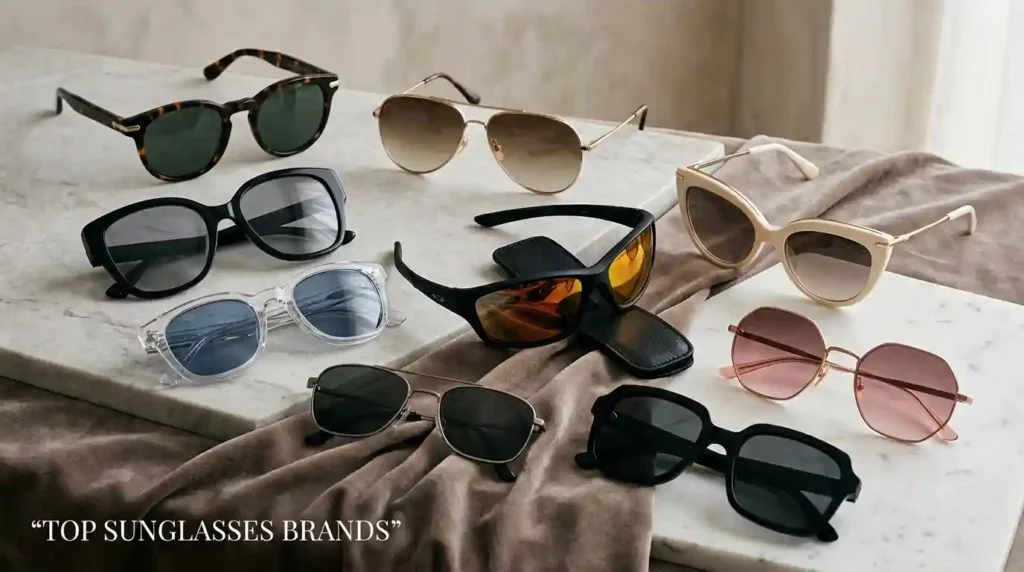
The world of sunglasses includes many recognizable names. Rather than treating every brand as identical, it helps to understand the style and purpose associated with different types of eyewear.
Ray-Ban: Classic Everyday Style
Ray-Ban is widely associated with iconic silhouettes such as the Aviator and Wayfarer. Its designs have become recognizable in everyday fashion and are often chosen by people who want a classic look that can work with different outfits.
The key appeal of classic eyewear is versatility. A timeless frame can work with casual clothing, smart-casual outfits, travel looks, and everyday summer wardrobes.
For shoppers who prefer recognizable designs that do not depend heavily on short-lived trends, classic frame shapes can be a useful starting point.
Persol: Refined Italian-Inspired Style
Persol is another established name in eyewear and is often associated with sophisticated styling and traditional craftsmanship.
This type of brand can appeal to shoppers who want sunglasses that feel more polished than basic everyday frames. Neutral colors, refined shapes, and carefully finished details can make this category suitable for smart-casual and dressier wardrobes.
Oakley: Performance-Focused Eyewear
Oakley is strongly associated with sports and active lifestyles. Performance sunglasses can be particularly useful for cycling, running, hiking, driving, and other outdoor activities where secure fit and lens performance matter.
OutdoorGearLab’s current testing guide separates sunglasses by use cases such as everyday wear, running, cycling, budget use, and women’s styles, showing why the “best” pair can change depending on activity.
If you spend a lot of time outdoors, look beyond appearance and consider coverage, stability, ventilation, lens technology, and comfort.
Maui Jim: Lens-Focused Choices
Maui Jim is another name often associated with premium sunglasses and lens technology. For shoppers who place strong emphasis on visual comfort and glare management, lens features may be more important than a fashion logo.
This highlights an important buying principle: the most attractive frame is not automatically the most suitable pair for every activity.
Prada: Luxury Fashion Appeal
Luxury fashion brands bring a different perspective to sunglasses. Prada, for example, represents the fashion-house side of eyewear, where frame shape, branding, materials, and seasonal design can be major considerations.
Luxury sunglasses may be attractive to shoppers who view eyewear as an important part of their overall outfit rather than simply protective equipment.
Tom Ford: Statement and Sophisticated Designs
Tom Ford sunglasses are associated with a polished and glamorous fashion aesthetic. Bold frames, sophisticated silhouettes, and recognizable styling can appeal to shoppers looking for eyewear that becomes part of their signature look.
For fashion-conscious buyers, statement sunglasses can change the appearance of a simple outfit without requiring many additional accessories.
Cartier and Chopard: Luxury Eyewear
High-end luxury houses such as Cartier and Chopard represent the premium end of the sunglasses market. Darveys’ luxury-focused guide includes these brands alongside other fashion houses and emphasizes elements such as materials, detailing, craftsmanship, and exclusivity.
This category is primarily relevant to shoppers who prioritize luxury design, distinctive details, premium materials, and brand heritage.
Best Sunglasses Brands by Lifestyle
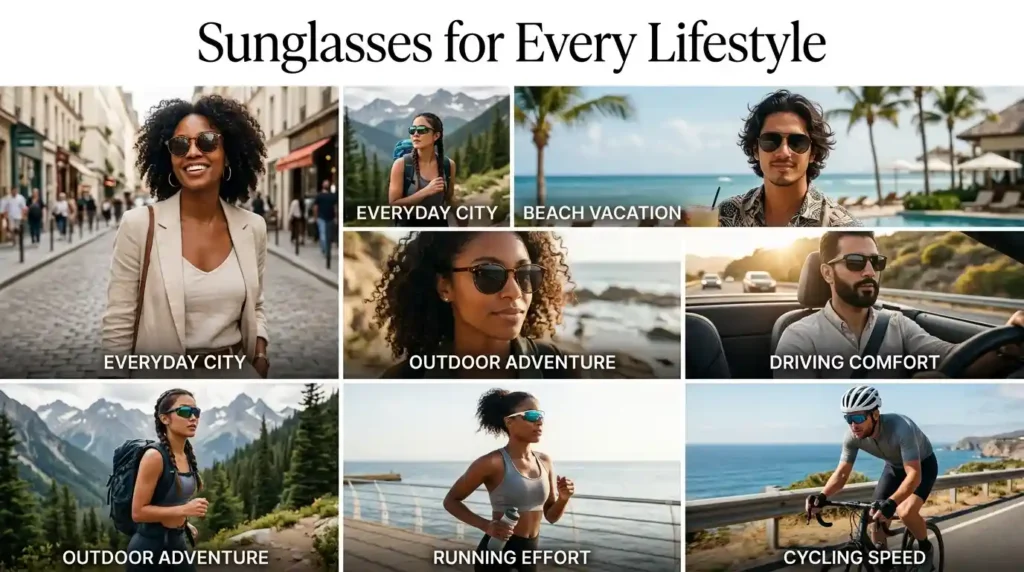
Instead of choosing a brand simply because it is famous, think about how you will use your sunglasses.
| Lifestyle | What to prioritize | Suitable brand category |
|---|---|---|
| Everyday city wear | Comfort, versatility, classic design | Heritage eyewear |
| Fashion-focused | Frame design, details, trends | Designer fashion brands |
| Driving | Optical clarity, glare management, comfortable fit | Lens-focused brands |
| Running | Secure fit, lightweight construction | Sports eyewear |
| Cycling | Coverage, stability, ventilation | Performance brands |
| Beach use | UV protection, glare reduction, coverage | Outdoor-focused eyewear |
| Luxury style | Materials, craftsmanship, distinctive design | Luxury fashion houses |
| Travel | Lightweight, versatile, durable frames | Everyday premium brands |
This approach solves one of the biggest problems with generic sunglasses lists: different people have different priorities.
Sunglasses for Different Face Shapes
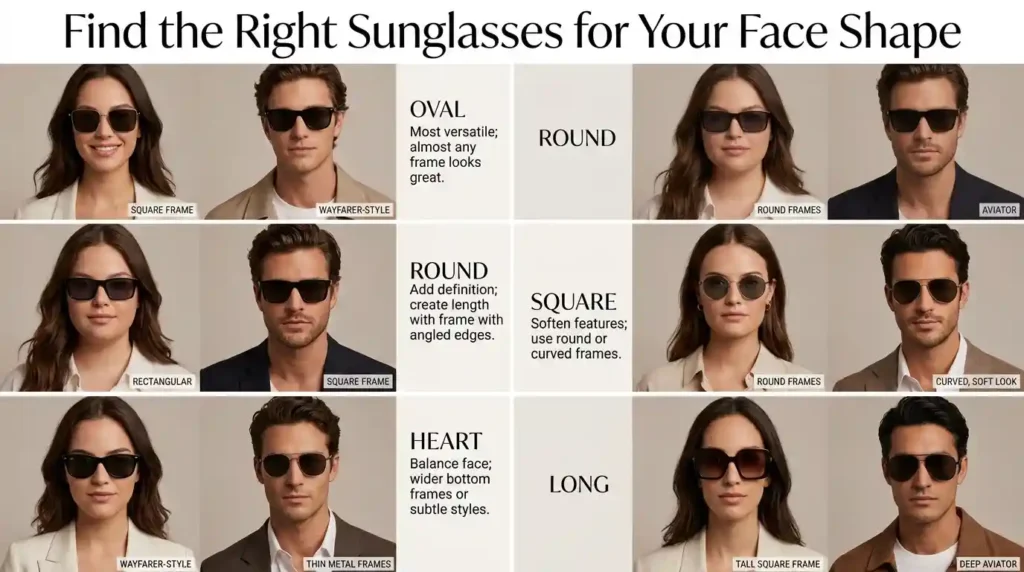
Frame shape can significantly affect how sunglasses look on your face. You do not have to follow strict rules, but understanding proportions can make shopping easier.
Round Faces
Angular frames can create contrast with softer facial lines. Square or rectangular styles may provide a more structured appearance.
Square Faces
Rounded or softly curved frames can balance stronger jawlines and angular features.
Oval Faces
Many frame shapes can work well with balanced facial proportions. The main consideration is choosing a frame that fits comfortably without being too narrow or excessively wide.
Heart-Shaped Faces
Softer frames, rounded shapes, and balanced proportions can complement a wider forehead and narrower chin.
Long Faces
Larger or deeper frames may help create visual balance. Avoid choosing a frame simply because it is fashionable; proportions and comfort should come first.
Lens Features to Consider
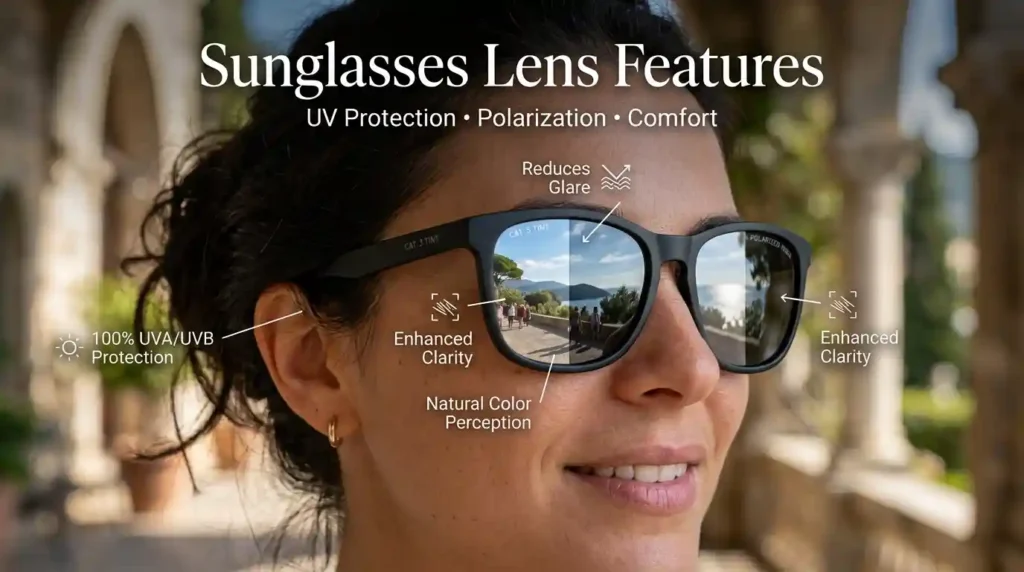
When shopping for sunglasses, the lens deserves as much attention as the frame.
UV Protection
UV protection should be one of your first considerations. Sunglasses are not only a fashion accessory; they are also intended to help protect your eyes from ultraviolet radiation.
Look for clearly stated UV protection information when buying. Darveys’ buying guide similarly places UV protection near the beginning of its sunglasses selection advice and discusses 100% UV protection and UV400 labeling.
Polarized Lenses
Polarized lenses can reduce glare from reflective surfaces such as water, roads, and other bright surfaces. They can be especially useful for driving, boating, fishing, and outdoor activities.
However, polarization is not automatically necessary for every situation. Think about where you will use your sunglasses before paying extra for this feature.
Lens Tint
Lens color can affect the visual experience and overall appearance of sunglasses.
Common options include:
- Gray
- Brown
- Green
- Amber
- Blue
- Gradient lenses
A darker lens is not necessarily better protection. UV protection and lens quality are separate considerations.
Frame Materials and Durability
The frame material can affect weight, flexibility, comfort, and durability.
Acetate: Often valued for its appearance, color variety, and ability to create substantial frame designs.
Metal: Can provide a refined appearance and may be used for lightweight or structured frames.
Titanium: Known for being lightweight and strong, making it useful in premium eyewear.
Polycarbonate and performance materials: Commonly considered for active and sports-oriented designs where impact resistance and low weight matter.
Your lifestyle should influence your choice. Someone who keeps sunglasses in a handbag may have different requirements from someone who wears them during sports.
Luxury vs Everyday Sunglasses
One of the biggest differences between sunglasses brands is their position in the market.
Luxury eyewear often focuses on:
- Fashion-house design
- Premium materials
- Brand heritage
- Distinctive detailing
- Limited or statement styles
- High-end positioning
Everyday premium eyewear may focus more heavily on:
- Versatility
- Comfort
- Classic designs
- Lens options
- Durability
- Practical value
Neither category automatically suits everyone. Your budget and intended use should guide the decision.
How Much Should You Spend on Sunglasses?
The right budget depends on your priorities. You can find inexpensive sunglasses for casual use, mid-range options with more features, and luxury designs that cost significantly more.
Do not assume that the most expensive sunglasses automatically provide the best overall experience for your needs.
Before purchasing, consider:
- How frequently you will wear them
- Where you will use them
- Whether you need polarized lenses
- How important fashion design is to you
- Whether the frame feels comfortable
- Whether the brand provides suitable warranty support
- How much you are comfortable spending
OutdoorGearLab’s current guide demonstrates the range of prices available, with recommendations spanning from lower-cost options to premium models.
How to Choose the Right Sunglasses Brand
A simple buying process can prevent you from choosing sunglasses based only on appearance.
Step 1: Decide Where You Will Wear Them
Think about driving, work, travel, beach trips, sports, hiking, or everyday city use.
Step 2: Choose Your Preferred Style
Decide whether you prefer aviators, wayfarers, round frames, square frames, oversized designs, or sporty shapes.
Step 3: Check the Lens
Look for appropriate UV protection and consider whether polarization or another lens feature would benefit your activities.
Step 4: Check the Fit
Sunglasses should sit comfortably without constantly sliding down your nose or pressing uncomfortably against your temples.
Step 5: Compare Materials
Consider whether you prefer acetate, metal, titanium, or performance materials.
Step 6: Compare the Price
Finally, make sure the price makes sense for how often and where you plan to use the sunglasses.
Common Sunglasses Buying Mistakes
Many shoppers focus heavily on the brand name and overlook practical details.
Avoid these mistakes:
- Buying only because of a famous logo
- Ignoring UV protection information
- Choosing the wrong frame size
- Buying a frame that feels uncomfortable
- Assuming darker lenses automatically provide better protection
- Ignoring your main use case
- Spending more than your budget requires
- Choosing a trend that does not suit your personal style
A well-chosen pair should feel like something you naturally want to wear, not an accessory that looks good only in a product photograph.
Why Brand Reputation Matters
Brand reputation can help shoppers narrow down a crowded market, especially when a company has a long history in eyewear. However, reputation should be combined with practical information.
Look for evidence of:
- Consistent product quality
- Reliable lens information
- Comfortable designs
- Appropriate UV protection
- Good construction
- Clear product specifications
- Suitable warranty or customer support
This is particularly important when buying expensive sunglasses.
Conclusion
Choosing the Best Sunglasses Brand in the World depends on what you actually need from your eyewear. A classic heritage brand may suit someone who wants timeless everyday style, while a sports-focused company may be more appropriate for running, cycling, hiking, or other outdoor activities.
Luxury fashion houses offer another direction, with distinctive designs, premium materials, and statement-making frames. Meanwhile, lens-focused and performance-oriented brands can be useful when optical clarity, glare management, coverage, and secure fit are higher priorities.
Rather than choosing a brand based only on popularity or price, compare UV protection, lens quality, frame material, comfort, durability, style, lifestyle, and budget. Once you understand these factors, finding the right sunglasses becomes much simpler—and you can choose a pair that looks good while fitting the way you actually live.
Frequently Asked Questions
What is the best sunglasses brand in the world?
There is no single brand that is ideal for every person. The right choice depends on whether you prioritize classic style, luxury design, sports performance, lens technology, comfort, durability, or price.
Which sunglasses brands are known for classic styles?
Heritage eyewear brands such as Ray-Ban are widely associated with recognizable classic silhouettes. Classic designs can be useful for people who want versatile sunglasses that work across different outfits.
What should I look for in the best sunglasses brands?
Focus on UV protection, lens quality, comfortable fit, frame materials, durability, style, warranty, and whether the sunglasses match your intended use.
Are expensive sunglasses better?
Not necessarily. Luxury sunglasses may offer distinctive designs, premium materials, and strong brand heritage, but the most expensive pair is not automatically the best choice for every lifestyle or budget.
Are polarized sunglasses worth buying?
Polarized lenses can be useful when you frequently encounter glare from roads, water, or other reflective surfaces. Whether they are worth the additional cost depends on how and where you use your sunglasses.
How do I choose sunglasses for my face shape?
Consider the balance between your facial proportions and the frame shape. Angular frames can contrast with round features, while softer frames can complement stronger facial angles.
Do sunglasses need UV protection?
UV protection is an important consideration when buying sunglasses. Look for clear information about the level of UV protection rather than assuming that a dark lens automatically provides it.
What is the best sunglasses style for everyday wear?
Classic and versatile shapes such as wayfarer, aviator, rounded, or softly rectangular frames can work well for everyday wear. The best option is the one that fits comfortably and matches your personal style.