Aging is a natural part of life, but your daily skincare habits can make a meaningful difference in how your skin looks and feels over time. Fine lines, dryness, uneven tone, sun spots, and changes in firmness are common as skin matures. The good news is that you do not need an extremely complicated routine to care for aging skin.
The best anti aging skincare USA routine should focus on consistency, sun protection, hydration, and carefully selected ingredients. Dermatologists emphasize that sunscreen and moisturizer are among the most important products for an effective anti-aging routine.
Whether you are starting your first anti-aging routine or improving an existing one, this guide explains the ingredients, steps, habits, and mistakes worth knowing.
What Is Anti Aging Skincare?
Anti-aging skincare refers to products and habits designed to help minimize visible signs of skin aging and protect the skin from premature damage.
Common concerns include:
- Fine lines and wrinkles
- Dry or rough texture
- Loss of firmness
- Uneven skin tone
- Dark spots
- Dull-looking skin
- Sun damage
- Dehydration
A good routine does not need to promise that it can stop aging. Instead, the goal is to support healthier-looking skin and reduce preventable damage.
The American Academy of Dermatology recommends starting with sunscreen and moisturizer before adding multiple treatment products.
Why Anti Aging Skincare Matters in the USA
Daily exposure to ultraviolet radiation is one of the major contributors to premature skin aging. Repeated unprotected sun exposure can contribute to wrinkles, age spots, uneven complexion, and other visible changes known as photoaging.
This makes sun protection especially important when building an anti aging skincare USA routine.
Your routine should also consider your:
- Skin type
- Age and individual concerns
- Sensitivity level
- Climate and sun exposure
- Existing skincare products
- Personal budget
Instead of buying every product labeled “anti-aging,” focus on ingredients and habits that address your specific concerns.
Best Ingredients for Anti Aging Skincare
Choosing the right ingredients can make your routine more purposeful. Different ingredients target different skin concerns, so understanding their roles helps you avoid unnecessary products.
1. Retinol and Retinoids
Retinol is one of the most recognized ingredients in anti-aging skincare. Retinoids are vitamin A derivatives that can improve skin texture, pigmentation, and the appearance of fine lines and wrinkles.
If you are new to retinol, start slowly rather than immediately using a strong formula every night.
How to Use Retinol
Use retinol at night and introduce it gradually. A moisturizer can also help support skin comfort.
Retinoids may cause irritation, particularly when introduced too quickly. People with sensitive or inflamed skin should consider discussing retinoid use with a dermatologist. Retinoids should not be used during pregnancy.
2. Vitamin C
Vitamin C is an antioxidant commonly used in morning skincare routines. It can help address uneven tone and support protection against environmental stressors.
For a simple morning routine, vitamin C can be applied after cleansing and before sunscreen.
3. Hyaluronic Acid
Hyaluronic acid is primarily valued for hydration. Well-hydrated skin can appear smoother and more comfortable, making this ingredient useful for people dealing with dryness.
It can be particularly helpful when mature skin feels tight or dehydrated.
4. Peptides
Peptides are commonly included in anti-aging formulations designed to support the appearance of firmer, smoother skin.
They can be useful as part of a broader routine, particularly when combined with moisturizer and daily sun protection.
5. Ceramides
Ceramides help support the skin barrier and are particularly useful when skin feels dry or sensitive.
A strong skin barrier can help the skin retain moisture and tolerate a skincare routine more comfortably.
A Simple Anti Aging Skincare Routine
A complicated routine is not automatically a better routine. In fact, using too many active products at once can increase irritation.
A simple routine can be divided into morning and evening steps.
Morning Routine
Step 1: Gentle Cleanser
Start with a gentle cleanser that removes overnight oil and impurities without leaving the skin excessively dry.
Step 2: Antioxidant Serum
If your skin tolerates it, use an antioxidant such as vitamin C.
Step 3: Moisturizer
Apply a moisturizer suited to your skin type. Moisturizing can help reduce the appearance of fine lines caused by dryness.
Step 4: Sunscreen
Finish with broad-spectrum sunscreen with SPF 30 or higher.
The American Academy of Dermatology recommends sunscreen that provides broad-spectrum protection, SPF 30 or higher, and water resistance.
Evening Routine
Step 1: Cleanse
Remove sunscreen, makeup, oil, and daily buildup with a gentle cleanser.
Step 2: Treatment
Depending on your skin needs, this may be a retinol or another targeted treatment.
Step 3: Moisturizer
Finish with a moisturizer to support hydration and the skin barrier.
Simple Routine Formula
| Morning | Evening |
|---|---|
| Gentle cleanser | Gentle cleanser |
| Vitamin C | Retinol or targeted treatment |
| Moisturizer | Moisturizer |
| SPF 30+ sunscreen | Optional barrier-supporting cream |
The key is consistency rather than constantly adding new products.
Anti Aging Skincare by Skin Type
The best routine depends partly on your skin type.
Dry Skin
Choose hydrating cleansers, rich moisturizers, ceramides, and hydrating ingredients such as hyaluronic acid.
Avoid excessive cleansing and frequent harsh exfoliation because these can make dryness more noticeable.
Oily Skin
Choose lightweight, non-comedogenic products when possible.
A lightweight moisturizer is still important because oily skin can also become dehydrated.
Sensitive Skin
Keep your routine simple.
Introduce one active ingredient at a time and avoid immediately combining several strong treatments.
If a product causes persistent burning, redness, or irritation, stop using it and consider professional advice.
Combination Skin
Use lightweight hydration across the face while giving extra attention to areas that become dry.
Your routine may need different textures rather than completely different products.
Anti Aging Skincare for Different Ages
Your skincare needs can change as you get older.
In Your 20s
Focus on prevention and healthy basic skincare habits.
A simple routine can include:
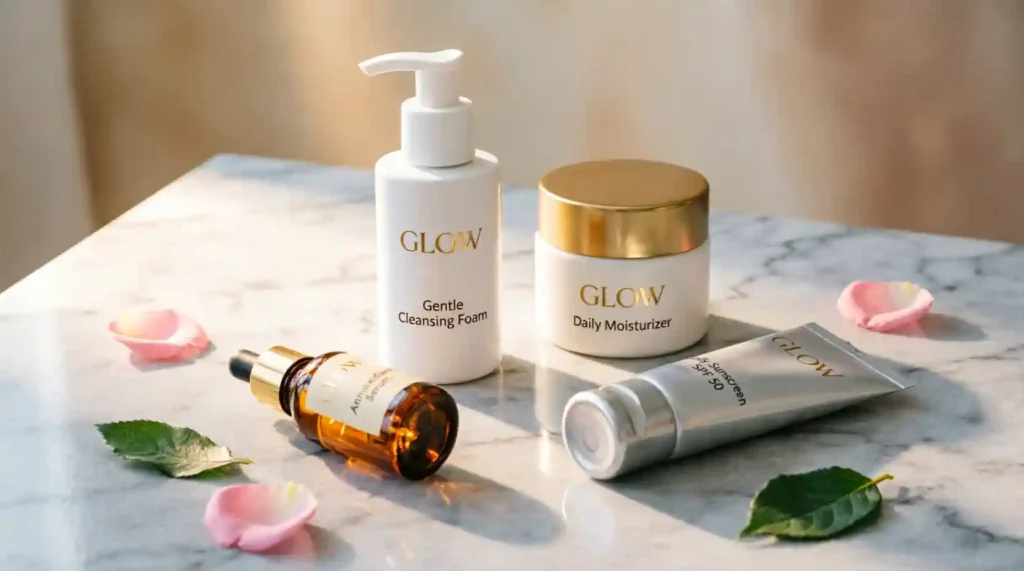
Vitamin C and retinoids may also be useful for specific concerns such as dark spots, texture, acne, and early fine lines.
In Your 30s
You may begin paying more attention to fine lines, uneven tone, and changes in skin texture.
This is a good time to become consistent with sunscreen, hydration, and carefully selected active ingredients.
In Your 40s and 50s
Dryness, fine lines, wrinkles, and changes in firmness may become more noticeable.
Dermatologists recommend continuing healthy skincare habits, especially sun protection and moisturizing, while choosing products according to your individual concerns.
| Age Range | Main Focus |
| 20s | Prevention and sun protection |
| 30s | Texture, tone, and early fine lines |
| 40s | Hydration, firmness, and wrinkles |
| 50s+ | Barrier support, dryness, sun damage, and mature-skin concerns |
Common Anti Aging Skincare Mistakes
Even expensive products may not deliver the results you want if your routine contains basic mistakes.
Skipping Sunscreen
This is one of the biggest mistakes.
UV exposure contributes significantly to premature skin aging, so sunscreen should remain a daily part of your routine.
Using Too Many Active Ingredients
Adding retinol, exfoliating acids, vitamin C, and other treatments all at once can overwhelm sensitive skin.
Start with one active and allow your skin time to adjust.
Using Strong Retinol Too Quickly
More strength does not always mean better results.
Dermatologists recommend starting gradually with retinoids to reduce irritation.
Forgetting Moisturizer
Mature or dry skin can benefit greatly from consistent moisturization.
The AAD notes that moisturizer can help minimize the appearance of fine lines by trapping water in the skin.
Expecting Overnight Results
Skincare usually requires consistency.
Changing products every few days makes it difficult to know what is actually helping your skin.
How to Choose Anti Aging Skincare Products in the USA
When shopping for anti aging skincare USA, do not choose a product simply because its packaging says “anti-aging.”
Instead, check:
1. Your Main Skin Concern
Are you mainly concerned about:
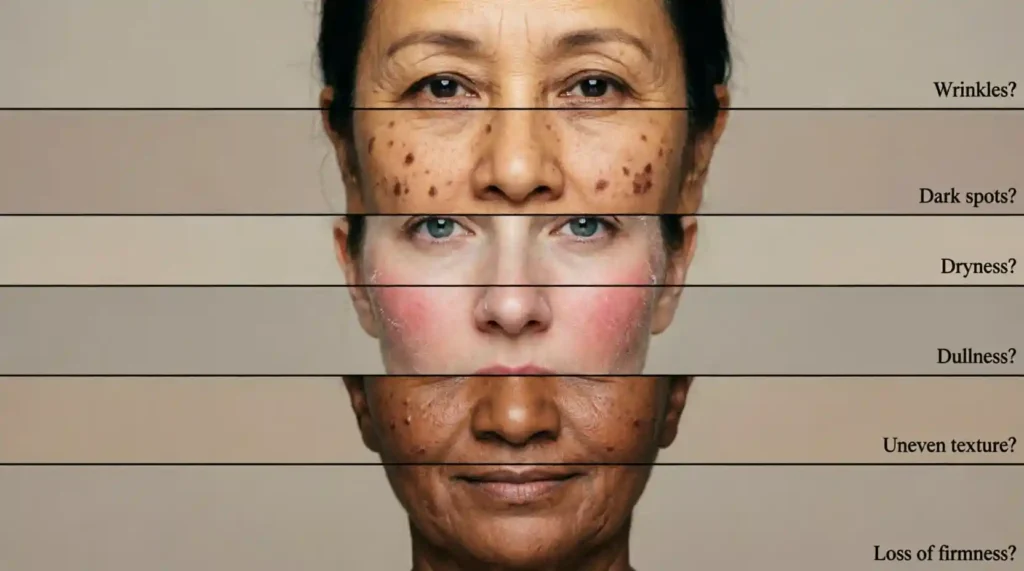
Choose products according to your primary concern.
2. The Ingredients
Look for ingredients that match your goal instead of buying multiple products with overlapping functions.
3. Your Skin Type
A product that works well for dry skin may not feel comfortable on oily or acne-prone skin.
4. Product Tolerance
Even a popular ingredient may not suit everyone.
Patch testing and gradual introduction can help reduce unwanted reactions.
5. Simplicity
A manageable routine is easier to follow consistently.
The AAD specifically advises focusing on one major aging concern at a time because using several anti-aging products together can irritate the skin.
Anti Aging Skincare USA: Simple Routine Comparison
| Routine Level | Products | Best For |
| Basic | Cleanser + moisturizer + SPF | Beginners |
| Balanced | Cleanser + antioxidant + moisturizer + SPF + nighttime treatment | Most skincare users |
| Targeted | Basic routine + selected treatments | Specific wrinkles, pigmentation, or texture concerns |
| Professional | Home routine + dermatologist-guided treatments | Persistent or advanced concerns |
A professional skincare plan may be appropriate when over-the-counter products are not addressing a particular concern.
When Should You See a Dermatologist?
Skincare products can help with many visible concerns, but they cannot solve every skin problem.
Consider seeing a board-certified dermatologist if you have:
- Persistent irritation
- Significant pigmentation changes
- Deep or rapidly changing wrinkles
- Suspicious or changing spots
- Severe dryness
- Persistent redness
- Concerns that do not improve with basic skincare
Dermatologists can recommend treatments based on your skin condition and goals. For sun-damaged skin, professional options may include prescription retinoids, chemical peels, lasers, or other treatments depending on the concern.
Conclusion
Building an effective anti aging skincare USA routine does not require dozens of products. The strongest foundation is simple: protect your skin from the sun, keep it moisturized, choose ingredients based on your specific concerns, and introduce active treatments gradually.
Retinol, vitamin C, hyaluronic acid, peptides, and ceramides can each have a place in a thoughtful routine, but your skin type and tolerance should guide your choices.
Most importantly, consistency matters. A simple routine that you follow regularly is more practical than an expensive routine that constantly change
FAQs
What is the best anti aging skincare routine?
A simple routine usually starts with gentle cleansing, moisturizer, and daily broad-spectrum SPF 30 or higher. A targeted treatment such as retinol may be added according to individual needs and tolerance.
What is the most important anti-aging skincare product?
Sunscreen is one of the most important products because UV exposure contributes to premature skin aging. The AAD recommends broad-spectrum SPF 30 or higher.
Is retinol good for aging skin?
Retinol can help improve the appearance of fine lines, wrinkles, uneven tone, and texture. It should be introduced gradually because irritation can occur.
Can moisturizer reduce wrinkles?
Moisturizer can temporarily make some fine lines look less noticeable by helping the skin retain water.
Should I use anti-aging skincare every day?
Consistency is generally more useful than frequently changing products. Daily sunscreen and moisturizer can form the foundation of an anti-aging routine.
Can anti-aging skincare stop skin from aging?
No skincare routine can stop natural aging. However, consistent sun protection and appropriate skincare can help reduce premature damage and improve the appearance of aging skin.