
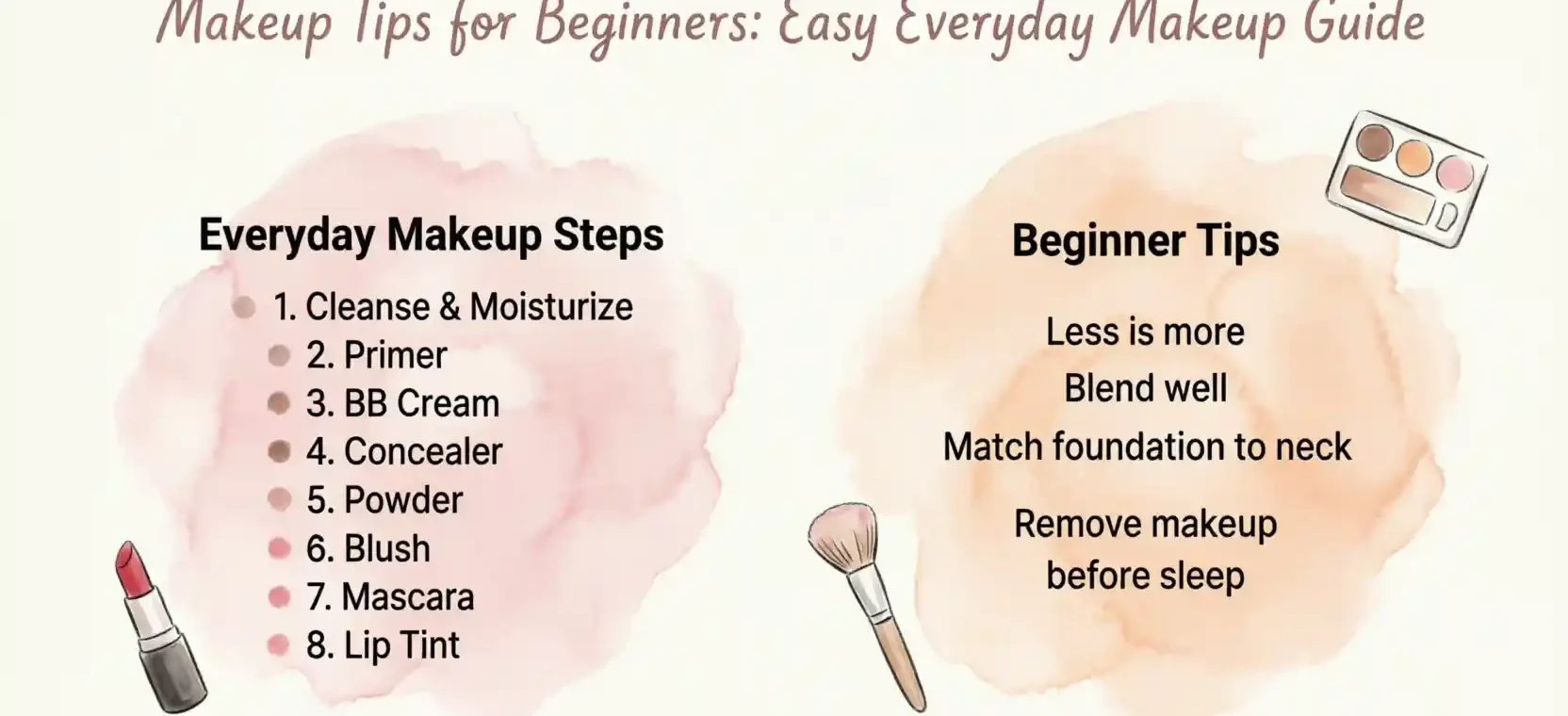
Starting makeup for the first time can feel a little overwhelming. With so many products, brushes, tutorials, and techniques available, it is easy to wonder where to begin.
The good news is that you do not need a professional kit or complicated routine to create a beautiful everyday look. The best Makeup Tips for Beginners focus on understanding the purpose of each product, starting with light layers, blending patiently, and practicing until the techniques feel natural.
Whether you are getting ready for college, work, a casual day out, or a special occasion, learning the basics can make makeup feel much easier and more enjoyable.
Start With the Right Makeup Mindset
Before touching a brush, remember that makeup is a skill.
Your first attempt may not look exactly like a tutorial. That is completely normal.
Instead of trying to master everything at once, learn one technique at a time.
Practice Before an Important Event
Do not experiment with a completely new look five minutes before a wedding or party.
Practice when you have plenty of time. You will quickly learn how much product your skin needs and which techniques feel comfortable.
Less Product Is Easier to Control
Beginners often assume that applying more product will create a better finish.
Usually, starting with a small amount gives you more control. You can always add another thin layer when necessary.
Prepare Your Face Before Makeup
Good application starts before foundation.
Clean, comfortable skin gives makeup a better surface to sit on.
Cleanse Gently
Begin with a clean face.
If your skin is sweaty, oily, or covered with leftover products, makeup may not sit evenly.
Moisturize
Use a moisturizer that suits your skin.
Allow it a little time to settle before applying complexion products.
Add Daytime Sun Protection
If you are doing daytime makeup, sunscreen should be part of your skincare preparation.
Allow it to settle before moving on to makeup.
Build a Beginner-Friendly Makeup Kit
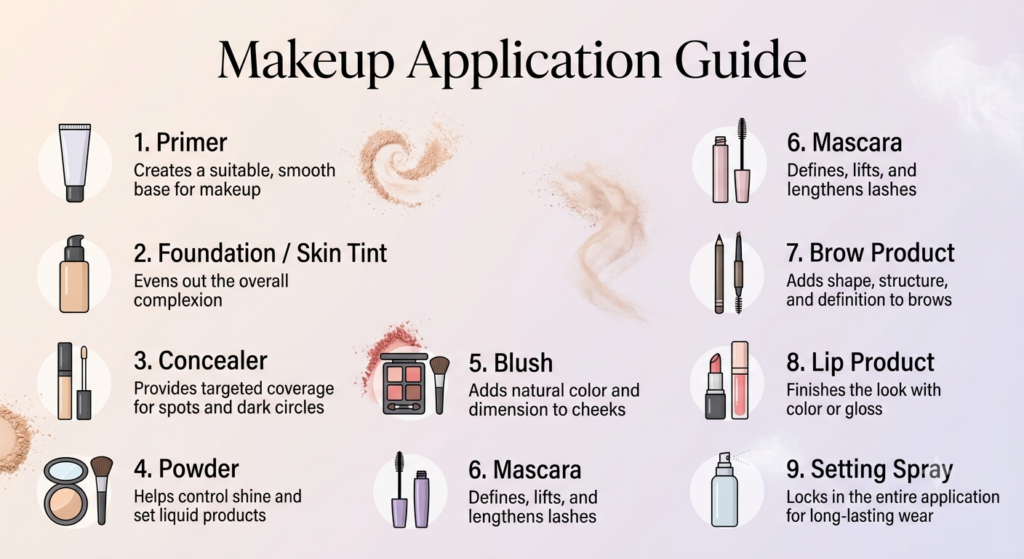
You do not need every product displayed in a beauty store.
Start with a small collection that covers the essentials.
You can add more products later as your confidence grows.
Learn the Correct Product Order
Product order can make application much easier.
A simple sequence is:
Skin preparation → Primer → Foundation → Concealer → Powder → Blush → Brows → Eyes → Lips
There is no requirement to use every step.
If you prefer a lightweight appearance, you might skip primer, foundation, or powder depending on your skin and the look you want.
How to Apply Foundation Without Looking Heavy
Foundation is often one of the hardest products for beginners because it is easy to use too much.
Choose the Right Match
Your foundation should blend naturally with your complexion.
When possible, compare shades in natural light rather than relying only on artificial store lighting.
Start in the Center
Place a small amount around areas where you want more evening-out.
Then blend outward.
This prevents unnecessary layers around the edges of the face.
Blend Instead of Rubbing
A damp makeup sponge, brush, or clean fingertips can all work depending on the formula.
The important thing is to blend patiently instead of dragging a thick layer across the face.
Use Concealer Only Where You Need It
Concealer is designed for targeted coverage.
You can use it around areas that need additional attention rather than covering the entire face.
Under-Eye Application
Use a small amount beneath the eyes and blend gently.
Too much product can settle into fine lines and make the area look heavier.
Spot Coverage
For individual blemishes or areas of discoloration, place a tiny amount directly where coverage is needed.
Then blend the edges while leaving the center more concentrated.
Make Your Brows Look Natural
Brows can change the appearance of the entire face, but beginners often make them too dark or sharply outlined.
Follow Your Natural Shape
Instead of creating a completely new brow shape, follow your existing structure.
Use short, light strokes where extra definition is needed.
Choose a Suitable Shade
A brow product that is dramatically darker than your natural coloring can make the result look harsh.
When in doubt, choose a softer shade and build gradually.
Simple Eye Makeup for Beginners
You do not need complicated eyeshadow techniques to create attractive eye makeup.
Start with one neutral shade across the lid.
Then use a slightly deeper shade near the outer corner if you want additional definition.
Keep Eyeliner Simple
If liquid eyeliner feels difficult, start with a pencil.
Apply small strokes rather than trying to create one perfect line immediately.
Apply Mascara Carefully
Place the wand close to the lash roots and move it upward with controlled strokes.
Avoid repeatedly adding layer after layer while the mascara becomes overly wet and clumpy.
Add a Fresh Touch With Blush
Blush is an easy way to bring warmth and freshness to your makeup. The right shade can make your complexion look more lively without making the overall look feel heavy.
Choose a color that complements your skin tone and works naturally with the rest of your makeup. If you are new to blush, start with a small amount and build the intensity gradually.
Find the Right Placement
Instead of applying a large amount at once, place a little blush on the fullest area of your cheeks and gently blend it outward.
For a softer appearance, keep the edges well blended so there are no obvious lines. If the color looks too strong, use a clean brush or makeup sponge to soften it rather than adding more foundation.
Choose a Finish You Like
Cream blush can create a fresh, skin-like appearance, while powder blush can be convenient for layering and touch-ups. Choose the texture that feels easiest for you to control.
Choose Lip Products That Suit Your Look
Lip makeup can be as simple or dramatic as you want. Beginners can start with comfortable formulas such as tinted balm, gloss, or a creamy lipstick before experimenting with more defined styles.
Pick a Shade for the Occasion
For everyday makeup, soft pinks, peaches, nudes, and muted rosy shades can create an effortless finish.
For an evening look, deeper reds, berries, or richer nude tones can add more definition. If you use a bold lip color, keeping the rest of your makeup balanced can create a more polished result.
Keep Your Lips Comfortable
If your lips feel dry, apply a moisturizing balm before lipstick and allow it to settle. This can help the color apply more smoothly and prevent the finished look from emphasizing dry patches.
For longer-lasting color, you can lightly outline the lips with a matching liner before applying lipstick, then gently blot away excess product.
Makeup Tools Every Beginner Should Know
Good tools can make application easier, but expensive brushes are not automatically necessary.
Makeup Sponge
A sponge can help blend foundation and concealer smoothly.
If you use a reusable sponge, clean it regularly.
Foundation Brush
A foundation brush can provide controlled application, especially when working with liquid or cream products.
Blending Brush
A soft blending brush can help soften eyeshadow edges.
Angled Brush
An angled brush can be useful for brows, eyeliner, or precise application depending on the product.
Common Beginner Makeup Errors
Learning what not to do can save you time and product.
Choosing the Wrong Foundation Shade
A foundation that is too light, too dark, or noticeably different from your neck can make the makeup look unnatural.
Applying Too Much Powder
Powder can help reduce unwanted shine, but excessive application may make the complexion appear dry or cakey.
Forgetting to Blend
Visible lines between products can make makeup look unfinished.
Spend a little extra time softening edges around foundation, concealer, blush, and eyeshadow.
Using Dirty Brushes
Brushes collect makeup residue, oil, and buildup.
Clean them regularly to keep your tools fresh and your application more consistent.
Copying Someone Else’s Exact Routine
Your face shape, skin type, coloring, and preferences may be completely different from the person in the tutorial.
Use tutorials to learn techniques rather than copying every product and step.
How to Make Makeup Last Longer
Once your application is finished, a few simple habits can help maintain the look.
Avoid Touching Your Face
Frequent touching can transfer makeup and increase unwanted shine.
Use Setting Products When Needed
Setting spray or a small amount of powder can help depending on your skin and the finish you want.
Carry Only What You Need
For touch-ups, a small powder, lip product, or concealer may be enough.
You do not need to carry your entire makeup bag.
Beginner Makeup Tips for Different Occasions
Your makeup does not need to look the same every day.
Everyday Look
Keep the complexion light, add subtle blush, define the brows, apply mascara, and finish with a comfortable lip product.
Work or Study Look
Choose products that feel comfortable for several hours.
Avoid experimenting with techniques you have never practiced before.
Evening Look
You can increase eye definition, add stronger blush or contour, and choose a more noticeable lip shade.
Build intensity gradually.
How to Improve Your Makeup Skills
The fastest way to improve is practice.
Try recreating one technique several times rather than attempting a completely different look every day.
Take photos in natural lighting to see how your application actually looks.
Pay attention to areas where makeup becomes uneven, too heavy, or poorly blended.
Over time, you will discover which products, shades, and techniques work best for you.
Quick Beginner Makeup Checklist
Before leaving the house, check:
- Is the foundation blended?
- Does the complexion look even around the jawline?
- Are the brows balanced?
- Is the mascara free of obvious clumps?
- Is the blush blended?
- Are there visible powder lines?
- Does the lip product look neat?
- Have you checked the final look in natural light?
These small checks can make a noticeable difference.
Conclusion
Learning makeup does not happen overnight.
You will probably make mistakes, try products you do not love, and discover techniques that work better for you than others. That is part of learning.
The most useful Makeup Tips for Beginners are not about creating a perfect face. They are about learning how products behave, understanding your own features, practicing patiently, and finding a style that makes you feel comfortable.
Frequently Asked Questions
What makeup should a beginner buy first?
Start with a few basics such as complexion coverage, concealer, blush, mascara, brow definition, and a comfortable lip product. Add items as you learn what you enjoy using.
How can beginners make makeup look natural?
Use thin layers, blend carefully, and avoid applying full coverage everywhere unless you actually need it.
Should beginners use primer?
Primer is optional. If your makeup applies comfortably and lasts well without it, you may not need one.
Is a makeup sponge or brush better?
Neither is universally better. Both can work well. Your choice depends on the product, desired finish, and personal preference.
How can I stop my foundation from looking cakey?
Use less product, prepare your skin properly, blend thoroughly, and avoid applying excessive powder.
How often should makeup brushes be cleaned?
Brushes used frequently should be cleaned regularly. Products used around the eyes deserve particularly careful hygiene.
Can I learn makeup without taking a class?
Absolutely. Beginner tutorials, practice, and patience can teach you a great deal. The key is to practice techniques instead of simply watching videos.
CTA
Ready to practice your first everyday makeup look? Start with a few essential products, follow the simple order in this guide, and practice one technique at a time. Your confidence will grow with every look.