
Losing weight does not have to mean following a strict diet or spending hours at the gym. For many people, the harder part is building daily habits that they can actually maintain.
A healthy routine can make weight management feel more manageable. Simple choices, such as eating balanced meals, drinking water, moving regularly, getting enough sleep, and planning ahead, can all support a healthier lifestyle.
The key is consistency rather than perfection. A routine that fits your schedule is more likely to last than an extreme plan that feels impossible to follow.
A healthy daily routine for weight loss does not have to mean following a strict diet or spending hours at the gym. For many people, the harder part is building daily habits that they can actually maintain.
You will also learn how to manage portions, plan meals, stay active, handle cravings, track progress, and avoid common mistakes.
Why a Healthy Daily Routine Can Make Weight Loss Easier
Weight management is influenced by many factors, including food choices, physical activity, sleep, stress, medications, health conditions, hormones, genetics, age, and your environment.
This is why there is no single routine that works for everyone.
However, a structured day can make healthy choices easier. Instead of deciding what to do every few hours, you can create simple habits around meals, movement, sleep, and self-care.
A practical routine should help you:
- Eat balanced meals without feeling overly restricted
- Become more aware of portion sizes
- Drink more water and fewer sugary drinks
- Include regular physical activity
- Get enough sleep
- Manage stress
- Plan for busy days
- Track progress without becoming obsessed with the scale
The goal is to build habits that support gradual, sustainable progress.
How a Healthy Daily Routine for Weight Loss Can Start in the Morning
Your morning does not need to be perfect. A few simple habits can help you start the day with a clear plan.
Begin the Day With Water and a Simple Plan
Drinking water in the morning can be an easy way to start your daily hydration routine. If you prefer flavor, you can add lemon or lime, but plain water is perfectly fine.
Next, think about your day.
If you know you will be busy, decide when you are likely to eat, when you can walk or exercise, and what meals or snacks you will have available.
Planning ahead can reduce last-minute food choices.
Choose a Balanced Breakfast When It Fits Your Routine
Breakfast does not need to be large or complicated.
If you enjoy eating in the morning, choose foods that provide protein, fiber, and other nutrients. Examples include eggs with wholegrain toast, plain yogurt with fruit and seeds, or oatmeal with nuts and berries.
However, you do not have to force yourself to eat breakfast simply because it is considered a traditional morning habit. What matters most is your overall eating pattern and whether your routine helps you meet your health goals.
Add Light Movement to Your Morning
You do not need an intense workout first thing in the morning.
A short walk, stretching session, household activity, or another form of movement can help you become more active.
If you have more time, you can include a planned workout. If your morning is busy, even a short activity is a practical starting point.
Healthy Daily Routine for Weight Loss: Building Balanced Meals
Food quality and portion size both matter when you are trying to manage your weight.
A healthy eating pattern does not mean removing entire food groups. Instead, focus on balanced meals that are satisfying and realistic for your lifestyle.
Fill More of Your Plate With Vegetables
Vegetables are generally rich in fiber and nutrients while being relatively low in calories.
Try to include a generous portion of vegetables with your main meals. You can use leafy greens, carrots, cucumbers, tomatoes, broccoli, peppers, cauliflower, or other vegetables you enjoy.
Adding vegetables can make a meal more filling without relying heavily on high-calorie foods. NHS guidance also recommends including multiple portions of vegetables in main meals.
Include a Protein Source With Your Meals
Protein can help make meals more satisfying.
Good choices include eggs, fish, chicken, lean meat, beans, lentils, yogurt, tofu, and other protein-rich foods.
Including protein at meals can also make it easier to build a balanced plate rather than relying mainly on refined carbohydrates or snacks.
Choose Wholegrain Carbohydrates More Often
Carbohydrates can be part of a healthy weight-loss diet.
Choose foods such as oats, wholegrain bread, brown rice, wholegrain pasta, potatoes, and other minimally processed carbohydrate sources.
The amount you need depends on your overall diet and energy needs. Instead of completely avoiding carbohydrates, focus on reasonable portions and nutritious choices.
Pay Attention to Oils, Sauces, and Extras
Small additions can contribute more calories than you may realize.
Cooking oils, spreads, creamy sauces, dressings, cheese, sugary drinks, and toppings can add significant energy to meals.
You do not need to remove them completely. Using sensible portions can help you enjoy your food while staying aware of your overall intake.
How Portion Awareness Can Support a Healthy Daily Routine
Even nutritious foods can contribute to weight gain when you regularly eat more energy than your body needs.
Portion awareness does not mean weighing every bite of food. It simply means becoming more mindful of how much you are eating.
Use a Plate Instead of Eating From the Package
When eating snacks, place a reasonable portion in a bowl or on a plate instead of eating directly from the packet.
This simple habit makes it easier to see how much you are eating.
Eat Slowly and Notice When You Are Full
Try to focus on your meal rather than eating while distracted by television or your phone.
Eating more slowly can give you time to notice your hunger and fullness signals.
If you are comfortably full, you do not have to finish everything on your plate.
Use Smaller Plates if They Help You
Smaller plates and bowls can make portions easier to manage.
This is not about eating tiny meals. It is about serving a reasonable amount before deciding whether you actually need more. NHS guidance also suggests smaller plates and bowls as one practical portion-control strategy.
Daily Movement Habits for a Healthy Weight-Loss Routine
Exercise is helpful, but you do not need to spend your entire day working out.
Regular movement can come from many different activities.
Add More Walking to Your Daily Schedule
Walking is one of the easiest ways to increase daily movement.
You can:
- Walk after a meal
- Take the stairs when practical
- Park farther away
- Walk while talking on the phone
- Take short movement breaks
- Go for an evening walk
Small periods of movement can add up throughout the day.
Include Strength Exercises When Appropriate
Strength training can be useful for overall fitness and body composition.
You can use bodyweight exercises, resistance bands, weights, or supervised gym exercises.
If you are new to exercise, start gradually and choose activities that match your fitness level.
Avoid the “All or Nothing” Exercise Mindset
Missing one workout does not mean you have failed.
If you cannot complete a full workout, do what you can. A short walk is better than deciding that the entire day is ruined.
The CDC recommends setting specific and realistic activity goals rather than choosing vague goals such as simply “exercise more.”
Healthy Hydration Habits for a Weight-Loss Routine
Drinks can easily add calories to your day without making you feel as full as a meal.
Water is a simple everyday choice. Unsweetened tea and other low-calorie drinks can also fit into a healthy routine.
Try to limit frequent intake of sugary sodas, sweetened coffee drinks, energy drinks, and other high-calorie beverages.
You do not need to make every drink choice perfect. The goal is to make lower-calorie options the easier everyday choice.
Meal Planning Habits for a Healthy Daily Routine
One of the biggest challenges with healthy eating is being unprepared.
When you are extremely hungry and have nothing planned, it can be easier to choose takeaway meals, sweets, or highly processed snacks.
Plan Your Main Meals Ahead
At the beginning of the day or week, think about a few meals you can realistically prepare.
Keep simple ingredients available, such as:
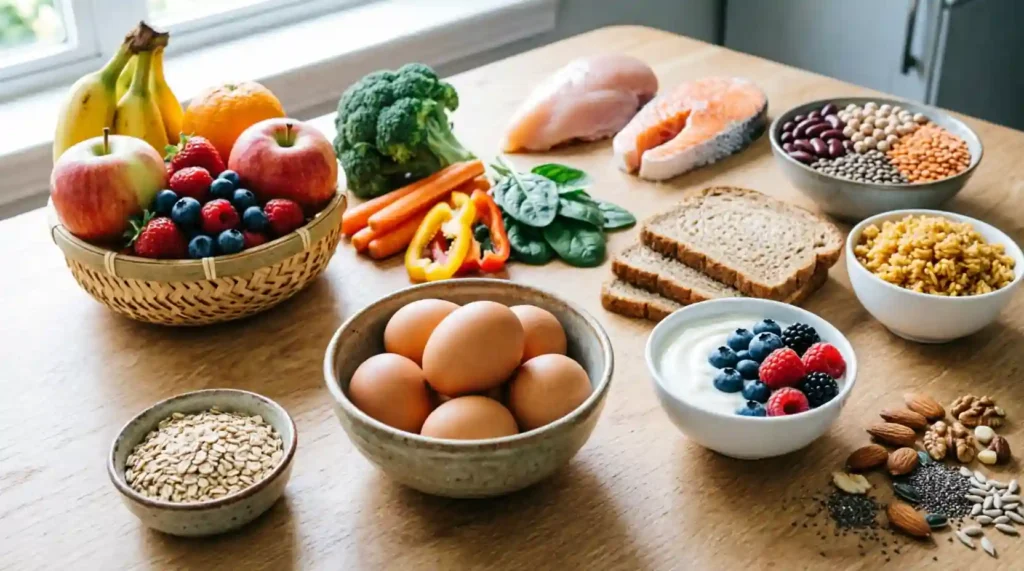
You do not need a complicated meal-prep system. Even knowing what you will eat for your next meal can make your day easier.
Keep Simple Snacks Available
If you get hungry between meals, having nutritious options nearby can help.
Fruit, yogurt, boiled eggs, vegetables, or a small portion of nuts can be convenient choices.
The best snack depends on your needs, appetite, and overall eating pattern.
Weight loss is not only about food and exercise.
Sleep and Stress Habits for a Healthy Daily Routine for Weight Loss
Sleep and stress are also part of a healthy lifestyle. The CDC includes enough sleep and stress management as components of healthy weight-loss habits.
Create a Consistent Sleep Schedule
Try to go to bed and wake up at roughly consistent times.
A relaxing bedtime routine can make it easier to prepare for sleep.
You can also reduce unnecessary screen use before bed and keep your sleeping environment comfortable.
Find Simple Ways to Manage Stress
Stress can make healthy routines harder to maintain.
Try activities that help you relax, such as walking, reading, hobbies, breathing exercises, or spending enjoyable time with people you trust.
You do not need to eliminate stress completely. The goal is to develop healthier ways to handle it.
How to Track Your Progress Without Focusing Only on the Scale
Tracking can help you understand which habits are working.
The CDC suggests tracking areas such as food and drinks, physical activity, sleep, and stress.
You can keep a simple record of:
| What to Track | What to Notice |
|---|---|
| Meals | Balance and portion sizes |
| Drinks | Water and sugary drinks |
| Activity | Walking, workouts, and movement |
| Sleep | Bedtime and hours of sleep |
| Stress | Stressful situations and coping habits |
| Weight | Long-term trend rather than daily changes |
You do not have to track everything.
Choose the areas that help you make better decisions without creating unnecessary stress.
How to Set Realistic Weight-Loss Goals
A common mistake is setting a goal that is too large or too fast.
Instead of saying, “I need to lose a lot of weight quickly,” choose smaller actions you can control.
For example:

Specific goals are easier to measure and adjust. The CDC recommends focusing on realistic, achievable goals and notes that setbacks are a normal part of the process.
Gradual weight loss is generally easier to maintain than rapid weight loss. NHS guidance commonly describes around 0.5 to 1 kg per week as a reasonable target for many adults, although individual needs vary.
What a Healthy Daily Routine for Weight Loss Can Look Like
There is no perfect schedule, but the following example can help you organize your day.
| Time | Healthy Routine |
|---|---|
| Morning | Water, balanced breakfast if desired, and light movement |
| Mid-morning | Water and a nutritious snack if hungry |
| Lunch | Protein, vegetables, and a sensible carbohydrate portion |
| Afternoon | Short walk or movement break |
| Evening | Balanced dinner and relaxed activity |
| After dinner | Optional gentle walk and avoid unnecessary snacking |
| Before bed | Relax, reduce screen time, and follow a regular sleep schedule |
Adjust the timing to your work, family responsibilities, sleep schedule, and personal preferences.
A routine is only useful if you can actually follow it.
Common Weight-Loss Mistakes That Can Make Progress Harder
Knowing what to avoid can be just as useful as knowing what to do.
Following Extremely Restrictive Diets
Very restrictive diets may be difficult to maintain and can make healthy eating feel exhausting.
A more balanced approach is usually easier to continue.
Skipping Meals to Save Calories
Skipping meals is not automatically a better weight-loss strategy.
For some people, becoming overly hungry can make later overeating or frequent snacking more likely. NHS guidance specifically advises against skipping meals as a general weight-loss tactic.
Expecting One Food to Burn Fat
No single food, drink, spice, or morning habit can replace an overall healthy routine.
Weight management depends on your overall energy intake, activity, eating pattern, and other lifestyle factors.
Exercising Hard While Ignoring Food Choices
Exercise supports health, but it does not automatically compensate for a consistently high calorie intake.
A combination of nutritious eating and regular movement is a more practical approach.
Giving Up After One Unhealthy Meal
One meal does not determine your entire progress.
If you eat more than planned, simply return to your normal routine at the next meal.
The CDC also emphasizes that setbacks happen and recommends getting back on track rather than abandoning your goals.
How to Make Your Weight-Loss Routine Easier to Maintain
The best routine is not necessarily the most difficult one. It is the one you can continue.
Start with two or three changes instead of trying to transform your entire lifestyle overnight.
For example, begin by:
- Drinking more water.
- Adding vegetables to your main meals.
- Walking for a short period each day.
Once these habits feel normal, add another goal.
This gradual approach can make healthy changes feel less overwhelming.
It is also helpful to prepare for difficult days. Keep easy nutritious foods available, have a backup meal plan, and accept that your routine will not be perfect every day.
When Should You Talk to a Healthcare Professional?
A general weight-loss routine is not suitable for everyone.
Speak with a healthcare professional before making major changes if you have a medical condition, take medications that may affect weight, follow a special diet, are pregnant, or have a current or previous eating disorder.
Professional guidance can also be helpful if you have significant weight-related health concerns or have repeatedly struggled to lose weight despite consistent lifestyle changes.
Conclusion
A healthy daily routine for weight loss does not need to be strict or complicated.
Start by building balanced meals with vegetables, protein, and sensible portions. Choose water more often, plan meals ahead, and include regular movement throughout your day.
Your routine should also include enough sleep and healthy ways to manage stress. Tracking a few habits can help you understand what is working without making you feel overwhelmed.
Most importantly, avoid the pressure to lose weight as quickly as possible. Sustainable progress comes from habits you can continue for months and years, not from extreme restrictions.
You may have busy days, missed workouts, or meals that do not go according to plan. That is normal. The important thing is to return to your routine and keep moving forward.
Start small, stay consistent, and build a routine that works for your real life.
FAQs
What is the best healthy daily routine for weight loss?
A useful routine includes balanced meals, sensible portions, regular movement, enough sleep, hydration, stress management, and realistic goals.
What should I do first thing in the morning to support weight loss?
Start with hydration and a simple plan for your day. If you enjoy breakfast, choose a balanced meal with protein and nutritious foods. You can also add a short walk or another form of movement.
Do I need to eat breakfast to lose weight?
Not necessarily. Breakfast can be part of a healthy routine if you enjoy it and it helps you manage your eating pattern. The overall quality and amount of food you eat matter more than following one fixed breakfast rule.
How much exercise should I get for weight loss?
Your ideal amount depends on your health, fitness level, and goals. Start with manageable activity and gradually increase it. Regular walking, strength exercises, and other activities you enjoy can all contribute to an active lifestyle.
Can drinking water help with weight loss?
Choosing water instead of sugary drinks can reduce calorie intake. Staying hydrated is also an important part of overall health.
Should I skip meals to lose weight faster?
Skipping meals is not necessary for weight loss. For some people, it may increase hunger and make later overeating more likely. A balanced eating pattern that fits your routine is often easier to maintain.
How can I control portion sizes without counting calories?
Use smaller plates, serve food instead of eating directly from packages, include plenty of vegetables, and pay attention to hunger and fullness.
How can I handle cravings while trying to lose weight?
Do not make every craving a reason to abandon your routine. Eat regular balanced meals, keep nutritious snacks available, and enjoy less nutritious foods occasionally in reasonable portions.
How long does it take to lose weight with a healthy routine?
The timeline varies from person to person. Gradual weight loss is generally more sustainable than rapid loss. Focus on consistent habits rather than expecting dramatic changes within a few days.
What should I do if I have an unhealthy meal?
Do not give up. One meal does not erase your progress. Simply return to your normal eating and activity routine at the next opportunity.
Can sleep help support weight management?
Sleep is part of a healthy lifestyle and can support your overall weight-management routine. A regular bedtime and adequate rest can make it easier to maintain healthy habits.
When should I get professional advice about weight loss?
Talk with a healthcare professional if you have a medical condition, take relevant medications, follow a special diet, have an eating disorder or history of one, or need individualized weight-management guidance.