
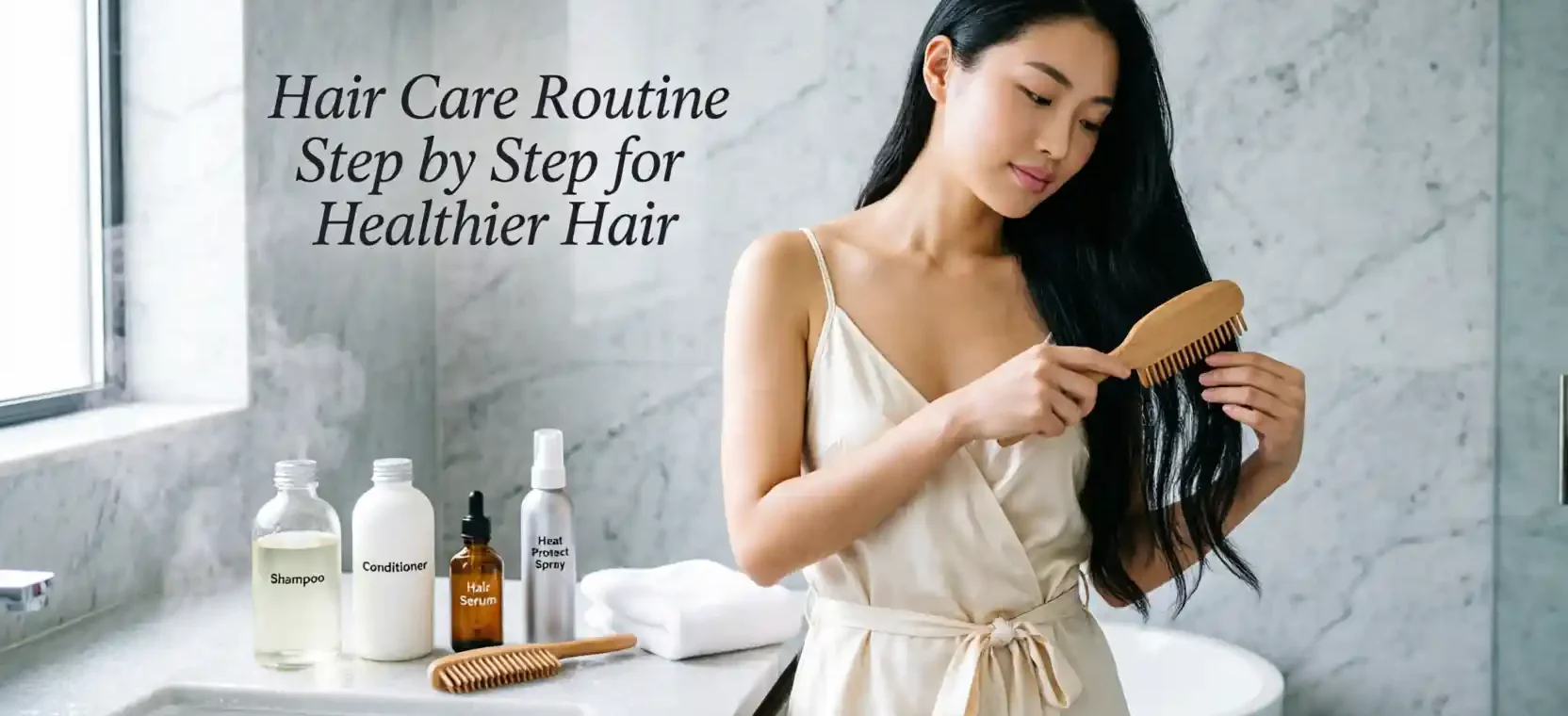
Healthy-looking hair does not usually come from one expensive product. It comes from the small things you do consistently—how you wash your hair, how you handle it while wet, how often you use heat, and even how gently you brush it.
A good routine should also fit your hair, not someone else’s. Fine hair may need a completely different approach from thick, curly, dry, or oily hair.
The good news? You don’t need ten products sitting in your bathroom. A few sensible steps, done correctly and consistently, can make your routine much easier.
The best hair routine is not the longest one; it is the one you can actually stick with.
Why a Simple Hair Routine Matters
Hair goes through a lot during an ordinary day. Washing, brushing, styling, sunlight, heat, friction, and environmental exposure can all affect its appearance.
The competitor guides cover many of the basic foundations, including washing, conditioning, gentle brushing, drying and healthy-hair habits. The American Academy of Dermatology also emphasizes practices such as choosing products according to hair type, washing based on how oily or dirty the hair becomes, and handling wet hair carefully.
But knowing individual tips is different from knowing what to do first, what comes next, and what to avoid. That’s where a step-by-step routine becomes more practical.
Step 1 — Start With Your Scalp and Hair Type
Before choosing products, understand what your scalp and hair actually need.
Some people have an oily scalp but dry ends. Others have dry hair, curls that need extra moisture, or fine strands that become weighed down easily.
Ask Yourself a Few Simple Questions
- Does my scalp become oily quickly?
- Are my ends dry or rough?
- Is my hair fine, thick, curly, wavy, or straight?
- Do I use heat styling regularly?
- Is my scalp comfortable between washes?
- Does my hair become tangled easily?
You don’t need to copy someone else’s routine just because their hair looks amazing in a video.
Step 2 — Wash Your Hair Properly
Shampoo is mainly about cleansing the scalp and removing excess oil, sweat, dirt, and product buildup.
The AAD recommends adjusting washing frequency according to how quickly the hair becomes dirty or oily rather than automatically following one fixed schedule for everyone.
Focus Shampoo on the Scalp
Apply shampoo mainly around the scalp rather than aggressively scrubbing the full length of the hair.
The lengths usually receive enough cleansing as the product rinses through.
Avoid Extremely Hot Water
Very hot water can leave some hair feeling dry and uncomfortable.
Comfortably warm water is usually a better choice than turning the shower into a steam room.
Don’t Scrub Aggressively
Your scalp needs cleansing, not harsh scratching.
Use your fingertips gently rather than digging your nails into the scalp.
Step 3 — Condition the Lengths
Conditioner helps improve manageability and can make hair easier to detangle.
The best place to concentrate conditioner is generally the mid-lengths and ends, particularly when those areas tend to become dry.
H3: Apply It Where Hair Needs It
For many hair types, applying conditioner heavily to the scalp can make the roots feel unnecessarily weighed down.
Think of shampoo as primarily a scalp step and conditioner as primarily a length-and-ends step.
Give It a Moment
Follow the product directions and allow the conditioner enough time to work before rinsing.
You don’t need to leave every conditioner on for an extremely long period to get a good result.
Step 4 — Handle Wet Hair Gently
This is one of the areas that deserves more attention than it usually receives.
Wet hair can be more fragile, so rough towel drying, aggressive brushing, or pulling through knots can create unnecessary stress.
The AAD recommends being gentle with wet hair and using care when detangling.
Don’t Rub Hair Aggressively With a Towel
Instead of vigorously rubbing the hair, gently squeeze out excess water.
Your hair does not need to be “scrubbed dry.”
Detangle Carefully
If your hair tangles easily, start from the ends and gradually work upward.
This can be much gentler than forcing a brush from the roots through a large knot.
Step 5 — Use Heat Protection Before Styling
Frequent heat styling can be tough on hair, especially when high temperatures are combined with repeated use.
If you regularly use a blow dryer, straightener, curling iron, or similar tool, heat protection should become part of your routine.
Keep the Temperature Sensible
Higher heat does not automatically mean better styling.
Use an appropriate setting for your hair and avoid repeatedly passing a hot tool over the same section.
Don’t Style Soaking-Wet Hair With Hot Tools
Allow hair to dry appropriately before using tools that are designed for dry hair.
A few extra minutes of preparation are better than rushing through styling and putting unnecessary stress on the hair.
Step 6 — Brush Without Pulling
Brushing should help remove tangles, not create them.
The right technique depends on your hair texture, but gentle handling is important across different hair types.
Start Where the Knots Are
For tangled hair, begin at the lower sections and work gradually upward.
Avoid Repeated Hard Strokes
If a brush keeps catching, stop and loosen the section rather than repeatedly pulling through it.
When the brush meets resistance, your answer should be gentleness—not more force.
Your Basic Routine at a Glance
| Step | What to Do | Main Purpose |
|---|---|---|
| 1 | Understand hair and scalp needs | Choose suitable care |
| 2 | Cleanse the scalp | Remove oil and buildup |
| 3 | Condition lengths | Improve softness and manageability |
| 4 | Dry gently | Reduce unnecessary stress |
| 5 | Protect before heat | Limit styling damage |
| 6 | Detangle carefully | Reduce pulling and breakage |
How Often Should You Wash Your Hair?
There is no single number that works for everyone.
Washing frequency can depend on scalp oiliness, hair texture, lifestyle, exercise, products used, and personal preference.
The AAD recommends washing according to how dirty or oily the hair becomes and focusing shampoo on the scalp.
Instead of asking “How many times should everyone wash their hair?”, ask “How does my scalp actually behave?”
If Your Scalp Gets Oily Quickly
You may need to cleanse more frequently.
If Your Hair Is Dry or Curly
You may find that less frequent washing works better, depending on your scalp and hair needs.
There is no prize for washing your hair as little as possible. The goal is to find a comfortable routine that keeps your scalp clean without leaving the lengths unnecessarily dry.
Common Hair-Care Mistakes to Stop Making
Even a good routine can lose its benefits if basic mistakes keep happening.
- Scrubbing the scalp aggressively
- Using extremely hot water
- Rubbing wet hair roughly with a towel
- Pulling hard through tangles
- Using high heat every day
- Applying too much product
- Ignoring the scalp while focusing only on the ends
- Following someone else’s routine without considering your own hair
Build a Routine That Fits Your Hair
There is no perfect routine that every woman or man should follow. Your hair’s texture, scalp condition, lifestyle, and styling habits all matter.
A routine that works beautifully for one person may leave another person’s hair feeling heavy, dry, or difficult to manage.
Fine Hair
Fine hair can become weighed down easily, especially when too many heavy products are layered together.
Try to:

Fine hair usually benefits from simplicity rather than a bathroom shelf full of products.
Thick or Coarse Hair
Thicker hair may need more conditioning and careful detangling.
Try to:
- Divide hair into sections when washing or conditioning.
- Give extra attention to dry ends.
- Detangle gradually instead of pulling through knots.
- Use suitable moisturizing products when needed.
Curly or Wavy Hair
Curly and wavy hair often needs gentle handling because excessive brushing and rough drying can affect its natural pattern.
Try to:
- Handle curls gently when wet.
- Avoid unnecessary brushing once the hair is dry.
- Use products designed for the hair’s texture.
- Give the hair enough moisture without overloading it.
The goal isn’t to force every hair type into the same routine; it is to work with the hair you actually have.
Don’t Forget Scalp Care
Beautiful-looking lengths begin with paying attention to the scalp as well.
The scalp can accumulate oil, sweat, styling products, and other buildup, which is why cleansing should be an important part of everyday hair care.
Keep the Scalp Clean
Use a suitable shampoo and focus the cleansing action around the scalp.
Pay Attention to Changes
If your scalp suddenly becomes unusually itchy, irritated, painful, or develops persistent flaking, don’t simply keep adding products.
Sometimes the smartest hair-care decision is knowing when a problem needs professional attention.
Night-Time Hair Habits Matter Too
Your routine does not have to stop after the shower.
Small habits before bed can help reduce unnecessary tangling and friction.
Don’t Go to Bed With Soaking-Wet Hair
Allow your hair to dry appropriately before sleeping rather than going to bed with it completely wet.
Keep Hair Gently Secured
If your hair tangles easily, a loose braid or another gentle style may help keep it more manageable overnight.
Avoid tying hair extremely tightly just to keep every strand perfectly in place.
Give Your Hair Breaks From Constant Styling
Straightening, curling, blow-drying, coloring, and other styling habits can become stressful when repeated constantly.
You do not have to eliminate styling completely. Instead, consider giving your hair occasional breaks.
Alternate Your Looks
Try natural texture, loose styles, braids, or simple hairstyles on days when you do not need heat styling.
Reduce Unnecessary Touch-Ups
Repeatedly restyling the same section throughout the day can expose it to more heat and manipulation than necessary.
Sometimes the healthiest styling decision is simply leaving your hair alone.
Products Should Support the Routine, Not Control It
It is easy to see a new serum, mask, oil, spray, or treatment online and assume it is the missing piece.
But adding more products does not automatically create better hair.
Introduce Products Slowly
If you want to try something new, introduce one product at a time.
This makes it easier to understand how your hair responds.
Follow Product Directions
More product does not necessarily mean better results.
Use the amount and frequency recommended on the packaging.
A simple routine performed consistently is usually easier to manage than a complicated routine that changes every few days.
Hair Care Routine Step by Step for a Busy Morning
Not everyone has thirty minutes to spend styling their hair every morning.
On busy days, keep the routine practical.
- Gently brush or detangle.
- Refresh the hair if needed.
- Apply a small amount of suitable styling product.
- Protect the hair if heat styling is necessary.
- Choose a simple hairstyle that does not require constant adjustment.
You don’t need a salon-style routine every morning to make your hair look neat and cared for.
A Simple Weekly Hair-Care Plan
| Routine | What to Focus On | Why It Helps |
|---|---|---|
| Wash day | Scalp cleansing + conditioning | Keeps hair clean and manageable |
| Between washes | Gentle brushing and styling | Reduces unnecessary manipulation |
| Styling days | Heat protection | Helps limit heat stress |
| Night | Gentle handling | Helps reduce tangling |
| Weekly check | Ends, scalp, buildup, product use | Keeps the routine practical |
Expert Tips for Healthier-Looking Hair
Good hair care is often about consistency rather than perfection.
Be Patient With Your Routine
Hair does not transform overnight. Give a routine enough time to understand whether it suits you.
Don’t Chase Every Hair Trend
A viral product or technique may not be appropriate for your texture or scalp.
Keep Your Routine Flexible
If your hair changes with the seasons, lifestyle, coloring, or styling habits, your routine may need to change too.
Focus on Technique
How you wash, dry, brush, and style your hair can matter just as much as the products you use.
Common Mistakes That Can Work Against Your Routine
Even with good products, certain habits can make hair care unnecessarily difficult.
- Washing with extremely hot water.
- Scrubbing the scalp too aggressively.
- Roughly rubbing hair with a towel.
- Pulling through knots.
- Using excessive heat.
- Applying too much product.
- Sleeping with soaking-wet hair.
- Keeping hairstyles extremely tight.
- Changing products constantly.
- Copying routines without considering your own hair.
Healthy-looking hair is built through small, repeatable habits—not one magical product.
The Routine You Can Actually Stick To
If the routine starts feeling like another daily chore, simplify it.
At its core, you need to understand your scalp, cleanse appropriately, condition the lengths, handle wet hair gently, protect against unnecessary heat, and avoid excessive manipulation.
Once those basics become habits, you can decide whether you genuinely need additional products or treatments.
Your routine should fit into your life instead of taking over your life.
Conclusion
A good hair care routine step by step does not need to contain a huge number of products or complicated techniques. What matters most is consistency, gentle handling, suitable cleansing, conditioning, careful drying, and protection from unnecessary heat.
The competitor content provides useful foundations such as washing correctly, conditioning, brushing carefully, and maintaining healthy hair habits. The more practical approach is to put those ideas into a clear sequence while also considering hair texture, scalp needs, styling habits, night care, and real-life schedules.
The biggest lesson is simple: listen to your hair instead of blindly copying someone else’s routine.
If your hair feels dry, oily, tangled, weighed down, or difficult to manage, that information can help you adjust your routine. And if a persistent scalp or hair problem appears, professional advice is more useful than endlessly adding new products.
Beautiful hair care does not have to be complicated. Sometimes the best routine is simply the one you understand, enjoy, and can maintain consistently.
FAQs
What should come first in a hair-care routine?
Start by understanding your scalp and hair type, then cleanse the scalp, condition the lengths, and handle wet hair gently.
How often should I wash my hair?
There is no universal schedule. Washing frequency should depend on how oily or dirty your scalp becomes, along with your hair type and lifestyle.
Should shampoo be applied to the whole hair?
Shampoo is generally most important around the scalp. The lengths usually receive enough cleansing as the product rinses through.
Should conditioner go on the scalp?
For many hair types, conditioner is more useful on the mid-lengths and ends. Applying too much to the roots can sometimes make them feel heavy.
Is it okay to brush wet hair?
Wet hair needs gentle handling because it can be more fragile. If you need to detangle it, work carefully and avoid pulling aggressively.
How can I protect my hair from heat?
Use an appropriate heat-protective product, avoid unnecessarily high temperatures, and reduce how frequently you use hot styling tools.
Can I follow the same routine every day?
The basic routine can remain consistent, but washing and styling frequency may change according to your scalp, hair type, weather, and lifestyle.
Do I need lots of hair products?
No. A complicated product collection is not automatically better. Start with the basics and add products only when there is a genuine reason.
How can I reduce hair tangling?
Gentle brushing, careful towel drying, suitable conditioning, and avoiding unnecessary friction can help make hair easier to manage.
When should I see a professional?
If you experience persistent scalp irritation, unusual hair loss, severe flaking, pain, or another ongoing concern, consider speaking with a dermatologist or qualified healthcare professional.