

Student life can be busy. Between classes, assignments, exams, social activities, family responsibilities, and screen-based study, it can be easy to put basic self-care aside. However, small daily choices can make a routine feel more balanced and sustainable. These healthy lifestyle tips for students focus on practical habits that can fit around school or college life without making your schedule unnecessarily complicated.
A healthy lifestyle does not mean following a perfect routine every day. Instead, it can involve getting enough sleep, eating regular nutritious meals, drinking water, moving your body, taking breaks from screens, managing study time, and making space for relaxation. The CDC notes that healthy eating, physical activity, sufficient sleep, and limiting screen time are important parts of healthy routines for children and teens.
For students, the goal is simple: create habits that support everyday energy, concentration, learning, and overall well-being while still leaving room for school, friends, hobbies, and rest.
Why Healthy Habits Matter for Students
Students spend a large part of their day learning, sitting, reading, writing, using computers, or moving between classes. A routine that includes regular meals, movement, sleep, and breaks can provide a better foundation for managing these daily demands.
Healthy habits are also easier to maintain when they are simple. Instead of trying to completely change your lifestyle overnight, start with one or two habits and gradually build from there.
For example, you could begin by:
- Going to bed at a more consistent time
- Carrying a water bottle
- Adding fruit or vegetables to meals
- Taking short movement breaks while studying
- Preparing simple snacks before a busy school day
- Putting your phone away during focused study sessions
- Leaving some time for hobbies and relaxation
The CDC also emphasizes that small daily changes can contribute to longer-term healthy routines.
Healthy Lifestyle Tips for Students
The following habits can help students create a practical routine without making healthy living feel like another assignment.
1. Start the Day With a Nutritious Breakfast
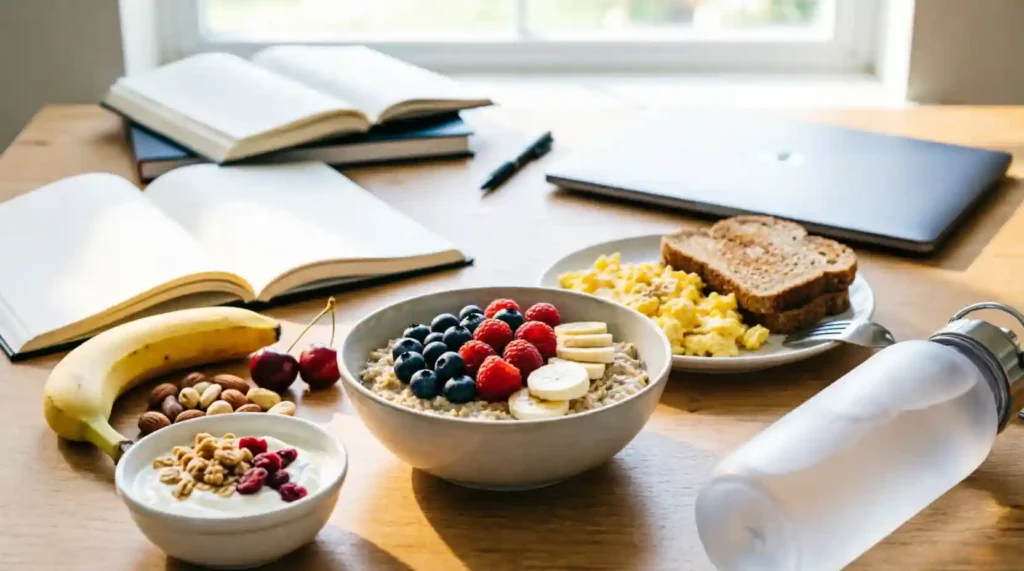
A busy morning can make breakfast easy to skip. However, having a simple breakfast can be a useful part of a regular eating routine.
It does not need to be complicated. Depending on your preferences and what is available, options might include:
- Oatmeal with fruit
- Eggs with whole-grain toast
- Yogurt with fruit
- A banana with peanut butter
- Whole-grain cereal with milk
- A simple homemade sandwich
The important idea is to build a consistent morning routine rather than relying on highly processed snacks whenever hunger appears.
2. Eat Regular, Balanced Meals
Students may spend long hours at school, college, libraries, or study sessions. Planning meals ahead can make it easier to avoid going through the entire day without eating properly.
Try to include a variety of foods across your meals. Fruits, vegetables, whole grains, protein sources, and dairy or suitable alternatives can all contribute to a varied eating pattern. The CDC recommends vegetables, fruits, whole grains, protein foods such as beans and lentils, and dairy products as part of healthy eating for children and teens.
A simple student meal can look like this:
| Meal | Simple Ideas |
|---|---|
| Breakfast | Eggs + toast + fruit |
| Lunch | Rice or whole grains + vegetables + beans/chicken |
| Snack | Fruit + yogurt or nuts |
| Dinner | Vegetables + protein + rice, potatoes, or another grain |
| Drink | Water throughout the day |
Your food choices can vary depending on your culture, budget, dietary needs, and family meals.
3. Keep Water Nearby
Students can become so focused on classes or assignments that they forget to drink water. Keeping a reusable bottle in your school bag or beside your study desk can make hydration easier to remember.
Choose water regularly instead of making sugary drinks your main beverage. The CDC specifically recommends encouraging children and teens to drink water instead of sugary drinks.
A practical habit is to refill your bottle during breaks rather than waiting until the end of the day.
4. Add Movement to Your School Day
Exercise does not have to mean spending hours at a gym. Walking to class, taking the stairs, cycling, playing a sport, dancing, stretching, or joining an activity with friends can all make movement part of daily life.
For children and teens ages 6–17, the CDC recommends at least 60 minutes of physical activity each day, including aerobic, bone-strengthening, and muscle-strengthening activities.
Adults and university students can also benefit from making regular movement part of their routine, while choosing activities appropriate for their individual circumstances.
If your schedule is busy, break movement into manageable opportunities:
- Walk during a study break
- Stretch after sitting for a long time
- Take a short evening walk
- Join a school or college sports activity
- Cycle when practical
- Do a short home workout
- Play an active game with friends
The aim is to make movement a normal part of the day rather than something you only do when you have lots of free time.
5. Take Breaks From Long Study Sessions

Studying continuously for several hours can make your routine feel exhausting. Regular breaks can give you an opportunity to stand up, walk around, stretch, drink water, or simply rest your eyes.
The Indiana University guide recommends reducing prolonged sitting and taking breaks from sedentary time.
Try a simple study pattern:
Study → short break → study → longer break → return to work
During the break, try not to automatically replace your study screen with another screen. A quick walk, stretch, conversation, or snack can create a clearer change of activity.
6. Manage Screen Time Wisely
Phones, laptops, tablets, and televisions are a normal part of student life. Students may need screens for classes, research, assignments, communication, and entertainment.
The goal is therefore not necessarily to eliminate screens. Instead, create boundaries between necessary screen use and recreational scrolling.
You could:
- Turn off unnecessary notifications while studying
- Keep your phone away during focused work
- Take screen-free breaks
- Avoid scrolling when you should be preparing for sleep
- Use screen-time settings to understand your habits
- Spend some free time outdoors or with friends
The CDC notes that excessive screen time among young people is associated with poorer sleep and other concerns, and recommends encouraging activities away from screens.
7. Protect Your Sleep Routine
Sleep is one of the most important parts of a student routine. Late-night studying, social media, gaming, entertainment, or irregular schedules can make it difficult to maintain consistent sleep.
Instead of trying to suddenly change your bedtime, make gradual improvements.
Consider:
- Going to bed around the same time when possible
- Creating a relaxing bedtime routine
- Reducing unnecessary screen use before bed
- Keeping your sleeping space comfortable
- Finishing demanding study tasks earlier when possible
- Avoiding unnecessary late-night scrolling
The CDC states that children and teens need more sleep than adults and that sufficient sleep is an important part of healthy routines.
8. Plan Your Study Time
A healthy lifestyle is not only about food and exercise. Organization can also help students create a more manageable daily routine.
Instead of keeping every assignment in your head, write down your priorities.
A simple daily list might include:
- Most important school task
- Second study task
- Class or academic responsibility
- Movement or outdoor activity
- Meal and water reminders
- Personal or family responsibility
- Relaxation before bedtime
Breaking a large assignment into smaller tasks can make it feel easier to approach. It can also help prevent unnecessary last-minute studying.
9. Choose Smart Study Snacks
Long study sessions can make students reach for whatever food is easiest to find. Preparing simple snacks in advance can make healthier choices more convenient.
Some easy options include:
- Apples or bananas
- Yogurt
- Nuts, where appropriate
- Carrots or other vegetables with hummus
- Fruit with nut butter
- Whole-grain crackers
- Homemade sandwiches
The CDC provides examples such as fruit with peanut butter, vegetables with hummus, and fruit with plain yogurt as snack ideas for children and teens.
The goal is not to label every food as “good” or “bad.” A varied eating pattern can include occasional treats while keeping nutritious foods available for everyday meals and snacks.
10. Make Time for Friends, Family, and Hobbies
Students need more than study time. Social connections, hobbies, creative activities, and relaxation can make a routine feel more balanced.
You might spend time:
- Talking with family
- Meeting friends
- Reading for pleasure
- Drawing or creating something
- Playing music
- Gardening
- Walking outdoors
- Playing a recreational sport
- Enjoying a favorite hobby
A healthy routine should leave some room for activities that are enjoyable rather than making every hour about productivity.
A Simple Healthy Daily Routine for Students
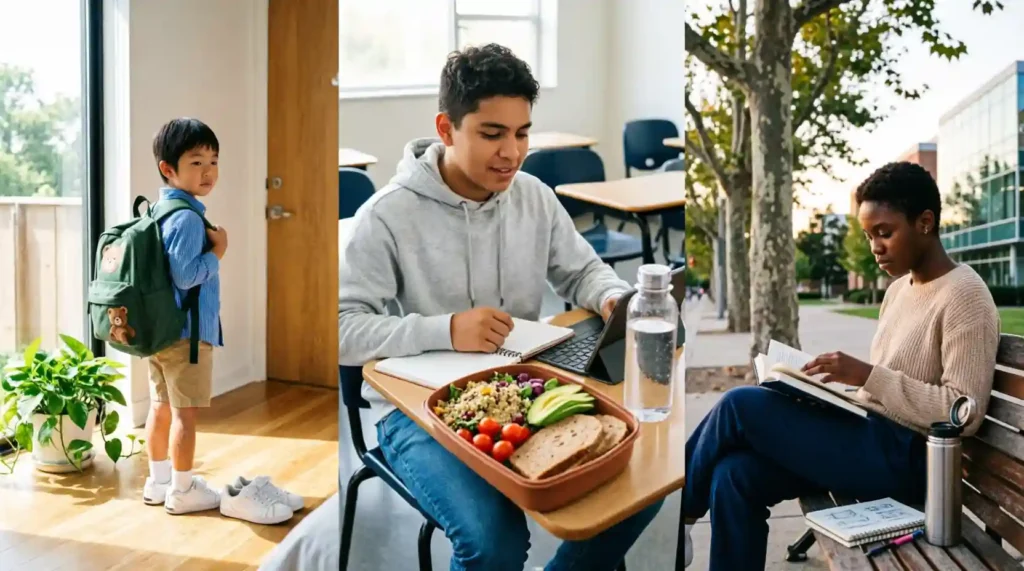
A routine does not need to be identical every day. However, having a general structure can make healthy habits easier to remember.
| Time | Healthy Routine Idea |
|---|---|
| Morning | Wake up, get ready, eat breakfast, drink water |
| School/College | Attend classes, eat lunch, stay active during breaks |
| Afternoon | Snack if needed, complete priority assignments |
| Evening | Walk, exercise, hobby, or social time |
| Night | Dinner, prepare for tomorrow, reduce unnecessary screen use |
| Bedtime | Relaxing routine and consistent sleep schedule |
Students with different class schedules, jobs, family responsibilities, or commuting arrangements can adapt this structure to fit their lives.
How to Stay Healthy During Exams
Exam periods can disrupt even a well-organized routine. Students may stay awake late, skip meals, sit for long periods, and spend most of the day looking at notes or screens.
Instead of abandoning healthy habits completely, simplify them.
During exam weeks:
- Keep easy nutritious foods available.
- Carry water while studying.
- Take short movement breaks.
- Use a realistic study schedule.
- Avoid unnecessary all-night study sessions.
- Give yourself time to sleep.
- Take short breaks between focused study periods.
- Stay connected with supportive people.
- Make room for brief relaxation.
You do not need a perfect routine during exams. Maintaining a few basic habits can be more realistic than trying to follow a complicated wellness plan.
Healthy Habits for Students on a Budget
Healthy living does not have to mean buying expensive products or joining a premium gym.
Students can build simple habits with affordable everyday choices.
For example:
- Choose seasonal fruits and vegetables.
- Prepare meals at home when practical.
- Carry water from home.
- Walk when it is safe and practical.
- Use free parks or outdoor spaces.
- Exercise at home without expensive equipment.
- Plan meals before shopping.
- Choose reusable containers for school snacks.
- Share recreational activities with friends.
A healthy routine is more sustainable when it fits your actual budget and schedule.
Common Student Habits That Can Disrupt a Healthy Routine
Some habits are easy to develop when school becomes demanding.
Skipping meals
Going for long periods without eating can make it harder to maintain a regular eating routine.
Studying without breaks
Long periods of sitting can make your day feel physically tiring. Stand up and move regularly.
Staying up too late
Late-night entertainment or studying can interfere with a consistent sleep schedule.
Constant phone checking
Frequent notifications can interrupt concentration and make study sessions longer.
Depending heavily on sugary drinks
Water is a simple everyday choice and can replace sugary beverages during many parts of the day.
Trying to change everything at once
A complicated routine can be difficult to maintain. Start with small habits and build gradually.
How to Make Healthy Habits Last
The easiest habit to maintain is usually one that fits naturally into your existing routine.
For example, instead of saying, “I will exercise for one hour every day,” start by adding a short walk after class. Once that becomes normal, you can gradually increase your activity if appropriate.
You can also connect habits together:
After waking up → drink water
After class → take a short walk
Before studying → prepare water and a snack
After finishing an assignment → take a movement break
Before bed → put your phone aside and begin your bedtime routine
This approach turns individual actions into a repeatable daily pattern.
Conclusion
Building a healthy student lifestyle does not require a perfect schedule. The most useful habits are often simple ones that can be repeated consistently: eat regular nutritious meals, drink water, move throughout the day, take study breaks, manage recreational screen time, protect your sleep, and make space for friends, family, hobbies, and relaxation.
The best healthy lifestyle tips for students are the ones that fit real student life. Start with one small change, make it part of your routine, and gradually add another. A balanced lifestyle is not about doing everything perfectly; it is about creating everyday habits that support learning, energy, well-being, and a healthier approach to student life.
Frequently Asked Questions
What are the best healthy lifestyle tips for students?
The most practical healthy lifestyle tips for students include eating regular nutritious meals, drinking water, staying physically active, getting enough sleep, taking breaks from screens and prolonged sitting, managing study time, and making room for relaxation and social activities.
How can students stay healthy during exams?
Students can maintain basic healthy habits during exams by planning study sessions, taking movement breaks, drinking water, eating regular meals, reducing unnecessary screen distractions, and protecting their sleep schedule.
What should students eat for a healthy lifestyle?
A varied eating pattern can include fruits, vegetables, whole grains, protein foods, and dairy or suitable alternatives. Individual dietary needs differ, so students should choose foods that fit their circumstances and preferences. The CDC recommends a variety of these food groups for healthy eating among children and teens.
How much physical activity do students need?
For children and teens ages 6–17, the CDC recommends at least 60 minutes of physical activity each day, including aerobic, bone-strengthening, and muscle-strengthening activities. Adult students should follow activity guidance appropriate to their age and individual circumstances.
How can students reduce screen time?
Start by identifying unnecessary screen use. Turn off distracting notifications, keep your phone away during focused study, take screen-free breaks, and replace some recreational screen time with walking, hobbies, conversations, or outdoor activities.
Why is sleep important for students?
Sleep is an important part of a healthy routine. Children and teens require different amounts of sleep depending on age, and maintaining sufficient sleep supports overall health and daily functioning.